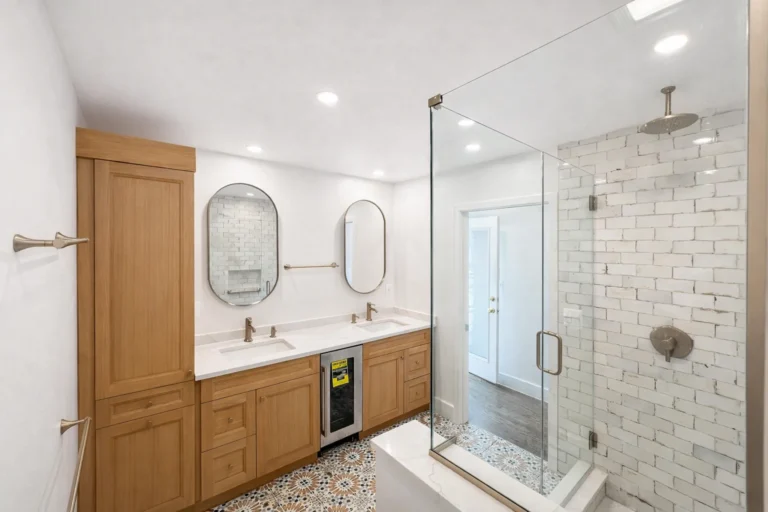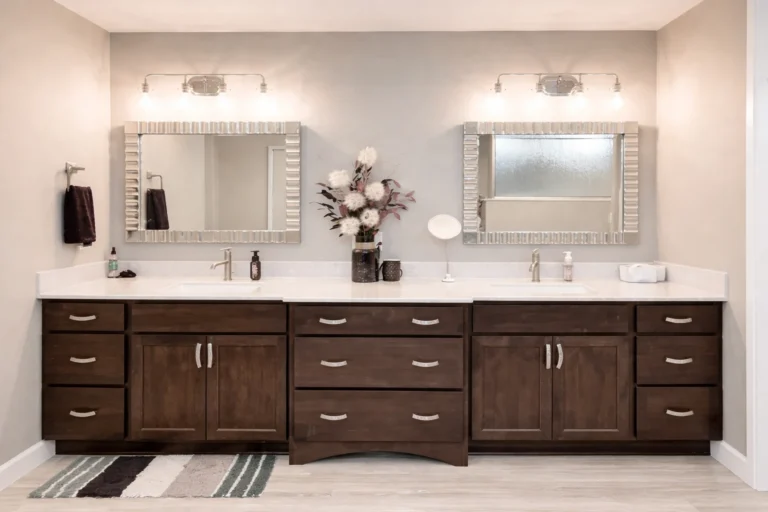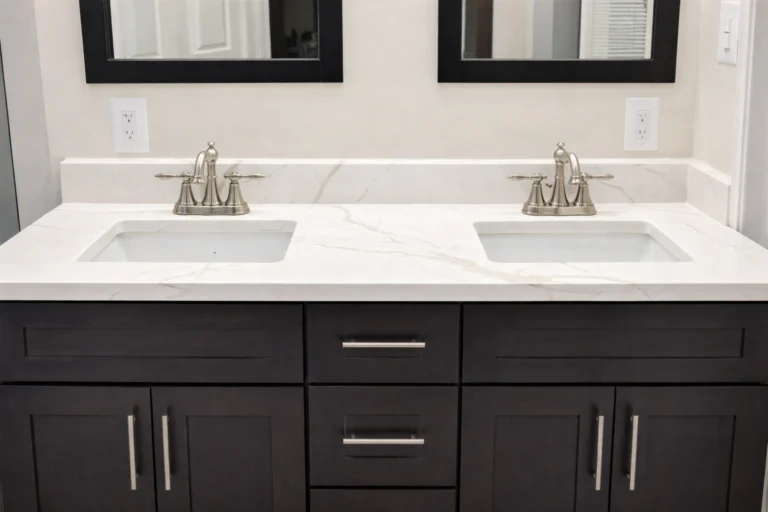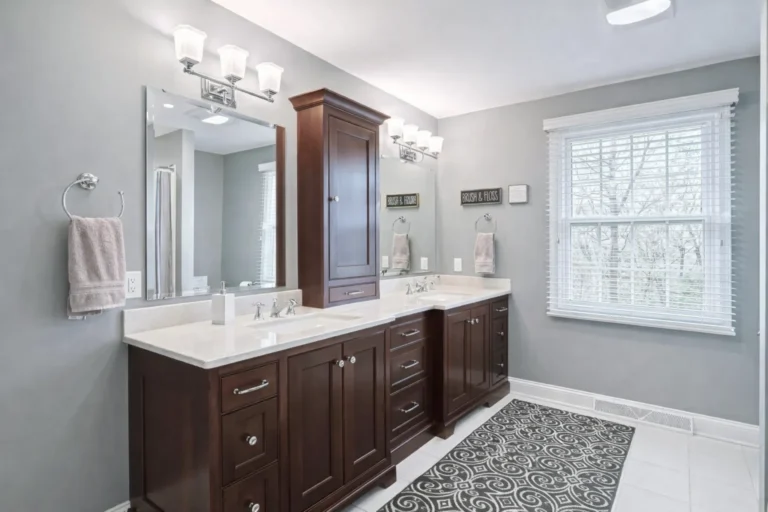

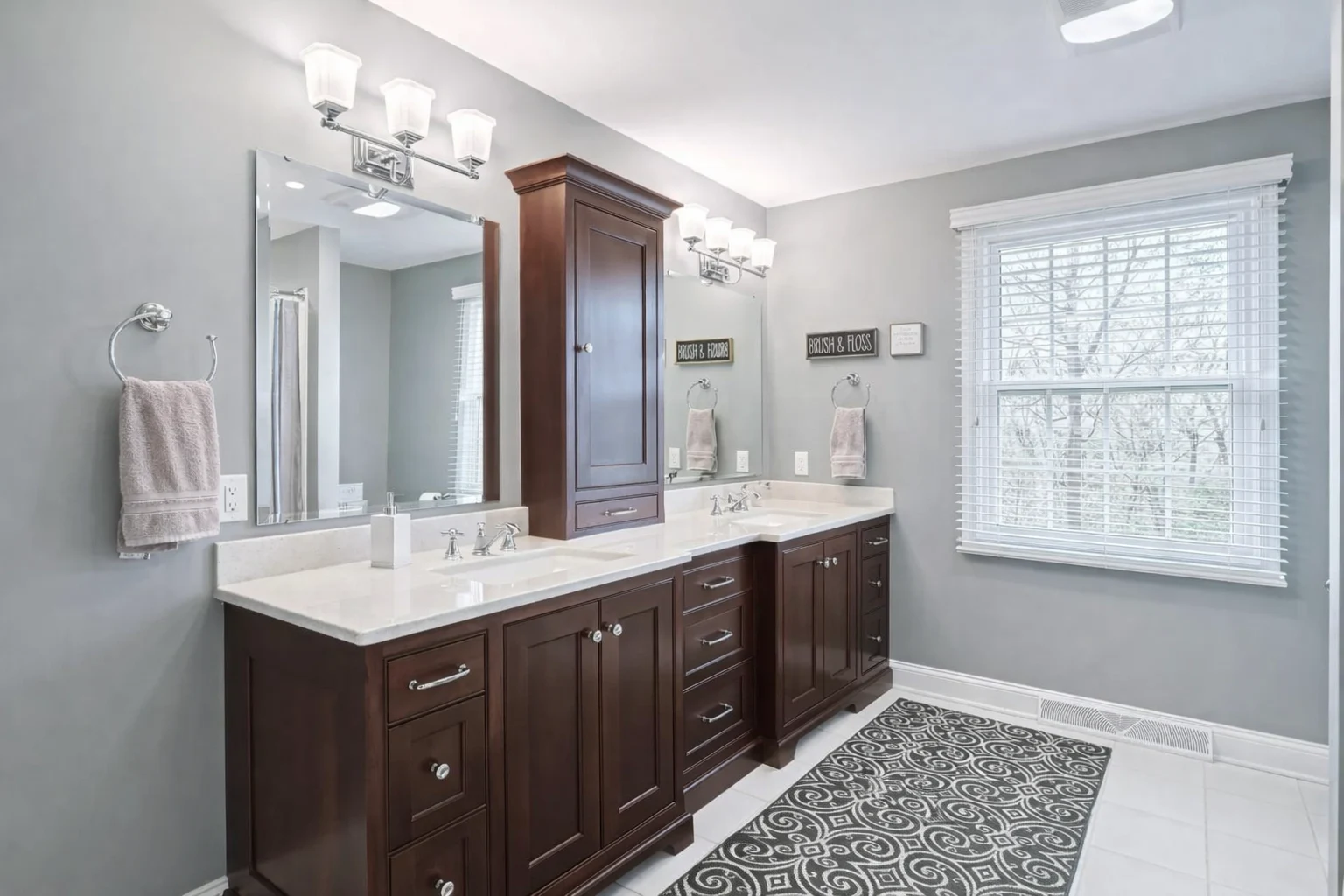
Thinking about upgrading your bathroom vanity? You’ve probably pondered: “Is it more economical to buy or build a bathroom vanity?” Both choices have their perks, and figuring out the best fit for you usually depends on your budget, time, and confidence in your DIY abilities. While the charm of custom craftsmanship can be delightful, opting for a mass-produced or Ready-to-Assemble (RTA) vanity might just save you some stress if you’re after a quicker result. Whether you’re diving into a full bathroom remodeling adventure or simply refreshing your vanity, we’ve got some handy tips and considerations to help you make the most cost-effective decision for your needs.
Weigh your options
Start by thinking about what you truly want from your vanity. Are you in need of a quick fix for a guest bathroom, or are you dreaming of a stunning statement piece with hidden features and luxurious finishes? Pinning down your style and practical needs early on can really help with deciding if a store-bought vanity or a custom build better suits your vision.
If you’re planning a big remodel, you might also be curious about what the most costly part of a bathroom remodel is. Keeping an eye on the budget? Take a peek at what a $10,000 bathroom remodel looks like to help see where a vanity can fit into your overall picture. And when it comes to installation, you might want to know if you need a plumber to install a new vanity.
Consider building pros
Building your very own bathroom vanity can be more accessible than you might think! According to Fine Homebuilding, putting together a traditional Shaker-style vanity using standard power tools is something you can accomplish over a couple of weekends (Fine Homebuilding). The greatest perk? Design freedom! You can add details like mortised butt hinges, solid-wood tops, and full-extension under-mount drawer slides that you won’t typically find in ready-made models. This kind of detail can give your vanity a lovely hand-crafted look, especially appealing in older homes where you’d like to mix modern convenience with a period-appropriate design.
Customizing dimensions is another fantastic advantage! By adjusting the height, width, and depth to fit your plumbing and floor plan, you can make the most of your space and ensure the vanity feels just right for your bathroom. In many older homes in Maryland, where bathrooms might have unique layouts, this flexibility can really make a difference.
You also get to choose premium materials. While this may increase your initial costs, it’s an investment in durability and can elevate resale value. Many homeowners who embark on building their own vanities talk about the joy that comes with seeing their completed creation. Whether you’re a woodworking enthusiast or simply enjoy adding a personal touch, a DIY approach can give your bathroom character and charm.
Look at building cons
Building a bathroom vanity might not be for everybody. Raw materials can range between $200 and $350, and you might also need to purchase additional tools like a circular saw, a sander, or even a thickness planer (Edward Martin). If you don’t already have these, consider adding another $100 to $300 or more to your expenses.
Time is another factor to keep in mind. Finishing the project over a weekend may sound quick, but that time adds up with the hours spent planning and building. You might find yourself making unexpected trips to the hardware store, fixing measurement errors, or tackling challenges with finishing techniques. Even experienced DIYers might face setbacks that push the timeline, especially when it involves plumbing.
Lastly, accounting for moisture exposure is super important in a bathroom! If the wood isn’t sealed and finished properly, you could end up with warping, peeling paint, or even mold. These worries could lead to unforeseen costs that may wind up surpassing the price of a store-bought vanity in the long run.
Evaluate buying advantages
If you’re looking for a straightforward solution, opting for a pre-built or RTA vanity provides convenience and predictable costs. Pre-built options come in a range of sizes, with some starting as low as $150 for budget-friendly models, while high-end varieties can reach into the thousands (DWR Interiors). This diversity makes it easy to select a piece that matches your bathroom aesthetics and budget.
RTA brands such as Lily Ann Cabinets specialize in affordable bathroom vanity options that feature sturdy materials and finishes. They employ innovative dovetail assembly methods to enhance strength while concealing hardware, giving a cleaner appearance (Lily Ann Cabinets). Since RTA vanities are mass-produced, you often benefit from consistent quality and moisture-resistant finishes that help prolong cabinet life with little upkeep.
Need your bathroom functional quickly? Pre-built vanities usually ship faster, and installation can often be completed in a day once you have the unit ready to go. If you want a usable bathroom without a lengthy construction period, this could be a significant advantage.
Check buying drawbacks
One downside of pre-built vanities is the limited design flexibility. Although many styles are available, you may struggle to match an exact fixture layout in an older home with unusual plumbing or dimensions. This could mean making compromises on storage setup or countertop materials.
Quality can also vary. Some lower-cost options might use cheaper materials or finishes that could deteriorate faster in a humid bathroom environment. While many models feature multi-stage finishes and moisture resistance, it’s always good to check the manufacturer’s reputation. If you find yourself replacing a bargain vanity after just a couple of years, you might lose out on cost benefits.
Lastly, making custom modifications, like adding an extra pull-out drawer or changing hinge locations, can be tricky. You get what you pay for, and that limited flexibility might be the difference between a vanity that fits perfectly and one that feels out of place in your space.
Compare overall costs
Here’s a quick overview of typical cost ranges for building versus buying:
| Option | Approximate Cost Range | Time & Effort |
|---|---|---|
| Building (DIY) | $200–$350 in materials (+ $100–$300 if tools needed) | 2–3 weekends or more |
| Buying (Pre-built/RTA) | $150–$3,399+ | Often installable in 1 day |
Sources:
You might also face installation costs ranging from $100 to $400 for a unit if you hire a professional (Edward Martin). If you choose to go the DIY route, consider potential plumbing help and your own time. For many, the convenience of a pre-built vanity outweighs higher initial costs, especially if you don’t have the tools or know-how to ensure a quality DIY outcome.
Remember crucial tips
• Always seek professional insight for custom needs. In older Maryland homes with quirky layouts, a local remodeling expert can recommend whether a built or purchased vanity will fit more smoothly.
• Think about the future. If you intend to fully overhaul your bathroom, consider how your vanity choice impacts plumbing or tiling. It’s also handy to explore how much should you spend on a bathroom vanity? before making a final choice.
• Don’t forget about resale value. A unique, well-constructed vanity can enhance your home’s attractiveness, just like a reliable brand with long-lasting warranties. Some professionals suggest that custom cabinetry might boost your home’s overall worth, but you need to weigh that against the risk of going overboard on customization.
• Be mindful of hidden costs. Mistakes, extra materials, or rushed finishes can lead to unexpected expenses. With a pre-built model, while you might pay a little more upfront, you usually get a clear cost structure and often a return policy if something doesn’t fit.
Ultimately, whether it’s cheaper to buy or build a bathroom vanity depends on your individual priorities. If creative freedom and the joy of woodworking excite you, crafting a DIY vanity may be incredibly rewarding. If your time or skills are limited, choosing a pre-built or RTA option can save you time and generally ensures a polished finish. By defining your needs early, sticking to a budget, and planning for any surprises, you can strike the perfect balance between cost, convenience, and customization.
And remember, if your renovation plan expands, don’t forget that sometimes moderation is key. Often, simple updates like new hardware, fresh countertops, or modern faucets can transform your space more affordably than a total overhaul. If you’re curious about the broader financial implications of significant upgrades, including double sinks or larger layouts, consider how they fit into your overall vision. You might be pleasantly surprised at how small tweaks can make your bathroom feel brand new.