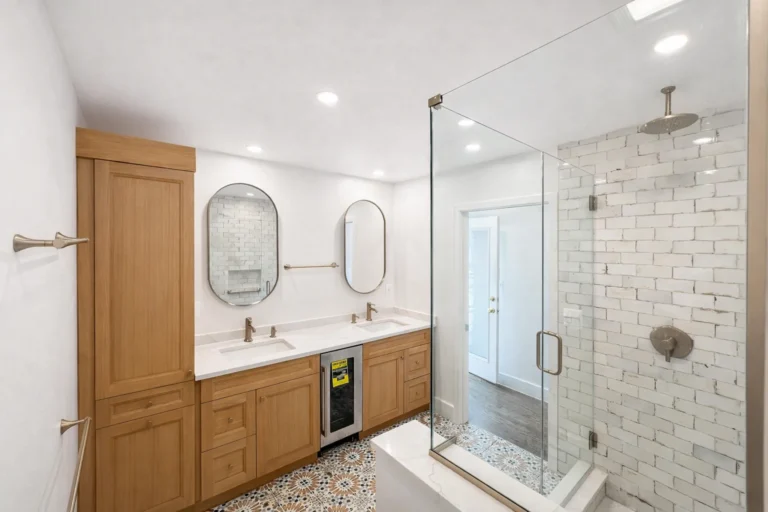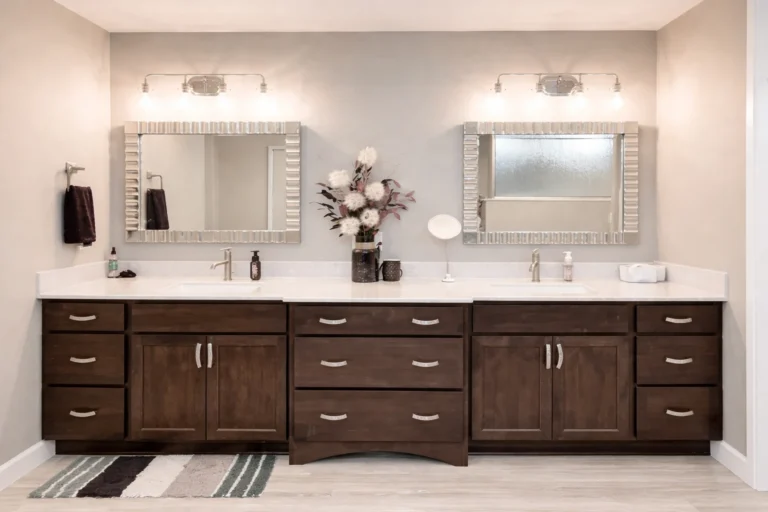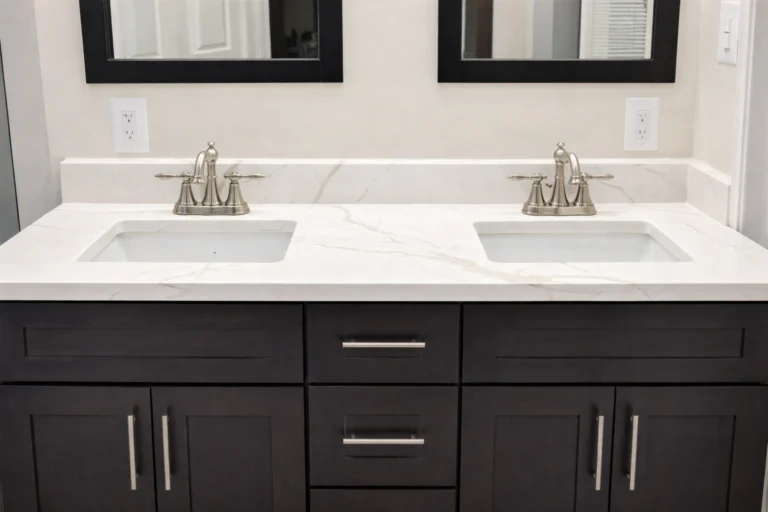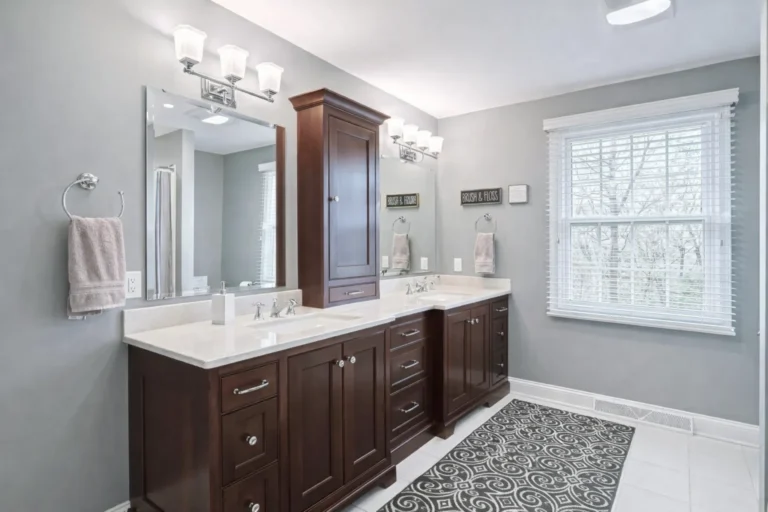
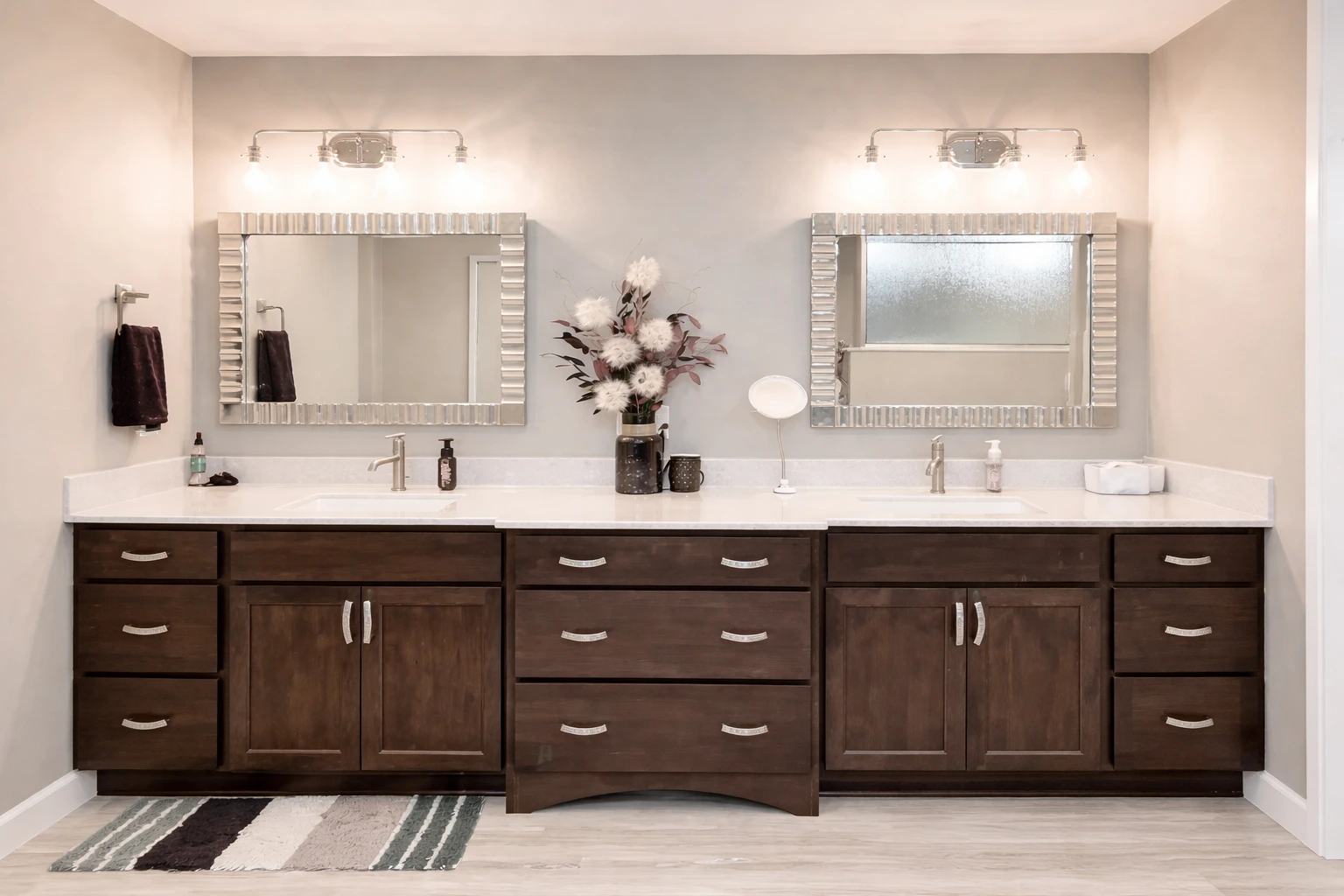
Why your bathroom vanity matters
Your bathroom vanity might seem like a small piece of the bigger remodeling picture, but it sets the stage for both style and functionality. In older Baltimore homes, moisture and daily wear can also put it to the test. If you overspend, the rest of your renovation budget might shrink, leaving less room for other essentials. But if you cut too many corners, you could end up with a vanity that warps, chips, or fails to meet your needs in as little as a few years.
Whether you are aiming for a long-lasting upgrade or a quick refresh as part of your bathroom remodeling project, understanding how much you should spend on a bathroom vanity helps you balance comfort, durability, and overall value. From cabinet materials to installation costs, each factor plays a part in determining if your vanity can handle heavy use and frequent temperature changes. With a bit of homework, you can find the right vanity that fits your style and budget without skimping on quality.
Understanding cost drivers
Several factors shape the total price tag on your vanity. Before you commit to a specific model or configuration, it helps to know the cost breakdown.
Materials
Cabinet materials are often the biggest cost driver. Woods like rubber wood or birch plywood can keep expenses down, but higher-end species such as Brazilian pear will generally increase the price. According to a 2024 analysis by SHKL Bathroom, cost differences come from durability and moisture resistance as well as specialized labor or milling (SHKL Bathroom). Homeowners in older Maryland homes benefit from quality moisture-resistant wood or plywood because it can handle the region’s varied seasons, from damp winters to humid summers.
Surface finishes
A melamine or laminate finish can be a budget-friendly choice if you want a wide range of colors without overspending. Natural veneers offer richer textures and stronger finishes, but they require more meticulous manufacturing. That extra work translates to higher prices, which might still be worth it if you want a vanity with an upscale appearance that can handle years of daily use. (SHKL Bathroom)
Hardware and sinks
Handle materials and guide rails are another key factor. Steel ball-bearing or soft-close rails often cost more than plastic drawer slides, but they make opening drawers smoother and less noisy. For sinks, integrated basins offer a seamless, modern look and can save space in smaller bathrooms, while pricier materials like artificial stone or marble raise the overall cost but deliver exceptional longevity. (SHKL Bathroom)
The sweet spot for return on investment
You might be tempted to go for the cheapest vanity, but keep in mind that materials, construction quality, and moisture resistance can matter more than brand or flashy design. According to a January 2026 guide by Tile&Top, most bathroom vanities fail when inferior materials and poor construction meet daily heavy use (Tile&Top).
For a standard U.S. bathroom, especially in an older home that needs solid upgrades, mid-range prefabricated vanities between $800 and $1,200 typically strike the best balance of cost and durability. When planning your bathroom remodeling project, allocating this amount to your vanity ensures you won’t sacrifice quality in other areas of the renovation. These often feature solid wood or plywood frames, along with soft-close hardware and water-resistant finishes, extending their life to eight years or more. Prefab options around this price range also commonly include quartz countertops, which resist stains and moisture better than laminate, reducing long-term maintenance costs. If your remodeling budget is tight but you still want quality, spending around $600 to $1,200 is typically enough to get a solid product you won’t need to replace anytime soon.
Prefabricated vs custom: Which is best?
For most homeowners in Baltimore’s suburbs, a prefabricated vanity usually covers all the bases for design, size, and longevity. Prefab models cost anywhere from $100 to $2,600 based on style, size, and materials, but the mid-range often delivers the best return. Custom vanities, meanwhile, can run two to three times more due to higher labor costs, specialized designs, and longer lead times. (Tile&Top)
A custom design might make sense if you have an unusually shaped space or a specific aesthetic goal. Keep in mind, though, that installation complexity and extra finishing steps can inflate your overall remodel cost. If you want to see how that fits into broader budgets, you can also explore what is the most expensive part of a bathroom remodel?. For standard layouts or smaller bathrooms, the cost of custom may rarely pay off in resale value.
Minimizing installation costs
It’s important to factor in the cost of assembly and labor. According to Kitchen Cabinet Depot research, professional installation for a prefabricated vanity in the U.S. usually runs between $200 and $600, completed in just a few hours (Kitchen Cabinet Depot). Meanwhile, custom vanity installs can cost $800 to $2,000 or more, reflecting the extra labor and on-site adjustments. Before scheduling your remodel, you might also want to check out do i need a plumber to install a new vanity? to ensure you are ready for any plumbing changes or code compliance steps.
Below is a quick glance at average cost tiers you might encounter:
| Price range | Typical features | Potential lifespan |
|---|---|---|
| $150–$600 | Basic moisture resistance, laminate top, simpler hardware | 3–5 years |
| $600–$1,200 | Better materials, often quartz top, soft-close drawers | 8–10 years |
| $1,200+ (custom) | Premium build, specialized design, luxury finishes | 10+ years |
Even if you prefer a DIY route, consider the time and tools required. Building your own vanity can cost $200 to $350 just for raw materials, plus another $100 to $300 if you need to buy or rent tools (Edward Martin). If you’re on the fence about DIY versus buying, we break down the pros and cons in is it cheaper to buy or build a bathroom vanity?.
Tips to avoid overspending
Setting a clear budget is the first step to making good decisions. You need to weigh your aesthetic goals against practical needs to refine your price range. Think about your home’s long-term plan and how much wear and tear your vanity will face.
Consider prebuilt free-standing vanities if your bathroom is fairly standard in shape. These often include a countertop and hardware, saving you the hassle of selecting pieces individually. For a custom look on a budget, you can sometimes add upgrades like a nicer faucet, or opt for a natural veneer over basic laminate. Also, pay attention to timing, many retailers offer discounts and seasonal sales. (405 Cabinets & Stone)
Finally, measure your space carefully to prevent costly returns or last-minute alterations. Double-check plumbing placements and the overall bathroom layout to ensure the vanity top doesn’t block drawers or hamper foot traffic. You can also balance your wishlist with realistic targets. If you’re planning a broader refresh, you might ask yourself what does a $10000 bathroom remodel look like? to see how a new vanity fits into a larger upgrade strategy.
Conclusion
A bathroom vanity should serve you for years while blending seamlessly with the rest of your space. When you ask yourself “how much should you spend on a bathroom vanity?” the answer usually rests between $600 and $1,200 for the best mix of durability, water resistance, and style. Beyond that sweet spot, you can certainly explore more luxurious options, just confirm they match your overall renovation goals.
Remember that the most expensive vanity isn’t always the most durable, and the cheapest might not hold up in older homes with heavier use. By weighing materials, hardware, finishes, and installation factors, you can choose a vanity that looks great, fits your budget, and stands the test of time. With smart planning, you’ll enjoy a polished upgrade without stress or regret.