Understand key cost drivers
When you ask, “what is the most expensive part of a bathroom remodel?” the answer may vary depending on your home’s size and layout. However, labor is consistently the most significant cost driver for higher-end projects. In many cases, labor can account for 40 to 70 percent of your total bathroom remodeling budget, especially in older homes where you often face outdated plumbing or uneven flooring. You may think the biggest checks go toward premium fixtures or countertops, but it is generally the behind-the-scenes work, such as tile installation and plumbing, that pushes costs upward.
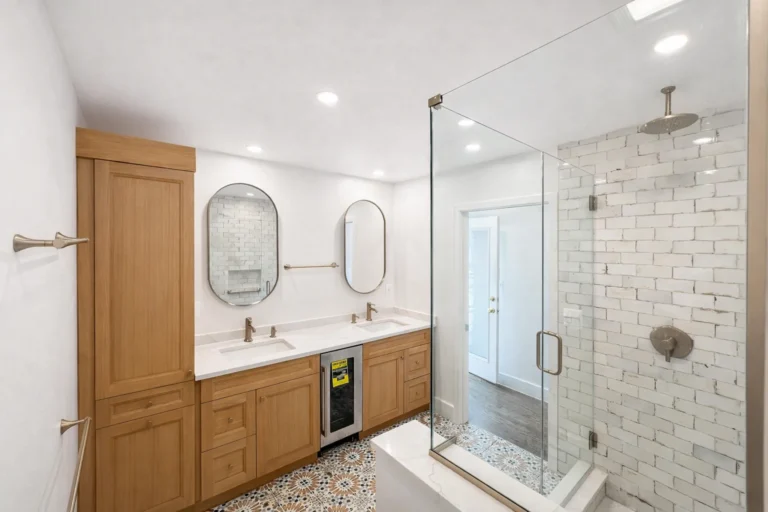
Tile labor alone can easily eclipse materials. In one 60-square-foot bathroom remodel, the tile work reached $6,613.78, covering installation of a mortar bed, ceramic tile in a herringbone pattern, and tile on shower walls, flooring, and recessed shelves (Bless’er House). Even if you choose moderate-priced tile, extra charges for intricate layouts or ceiling work can add up. If you plan to move plumbing elements around or expand the shower, you might also face the cost of reinforcing floors and walls, especially in older homes around Baltimore, MD, where code compliance and structural updates often go hand in hand.
Investigate labor expenses
Plumbing labor is another major expense. Mounting new faucets, relocating sinks, or installing a complex shower system can be surprisingly time-intensive. A thorough plumbing upgrade may cost thousands of dollars, mainly due to the expertise required to prevent leaks and adhere to building codes. In one en suite remodel, plumbing labor reached $4,915.38 for installing wall-mounted fixtures, which required extra work behind the walls (Bless’er House).
If your older home has corroded pipes or hidden water damage, you could be looking at an even higher bill. Companies like TriFection note that when pipes are old or shifting your fixtures requires concrete cutting, overall remodeling costs spike significantly (TriFection). For Baltimore homeowners, local plumbing labor rates and unforeseen structural challenges are often the biggest reasons why the bathroom remodeling budget can balloon beyond initial estimates.
General carpentry is another area to watch. Demolishing or reframing walls, upgrading subfloors, and relocating vanity spaces all involve experienced carpenters who work hand in hand with plumbers and electricians. These professionals handle everything from drywall to building custom shelves. Although general carpentry might not match tile or plumbing costs, it contributes a notable chunk to your final invoice.
Compare fixture finishes and materials
High-end fixtures, including shower doors, faucets, and lighting, add a stylish touch but also increase costs. A custom frameless glass shower door can cost over $2,900 when factoring in fabrication and unique hardware (Bless’er House). Factors like non-standard shapes, antique finishes, or thicker glass drive the price higher. In a city such as New York, top-tier custom finishes and materials, like marble or granite tile, may see costs range from $5 to $100 per square foot (MyHome US).
For fixture finishes, pricing often reflects the manufacturing process and durability:
- Polished chrome: The most affordable, known for its shiny, mirror-like appearance
- Satin nickel: A step up in cost due to extra brushing techniques
- Matte black: More expensive from the powder-coating process and modern appeal
- Satin brass: Higher cost, thanks to specialized PVD technology and a warm, brushed look
- Polished nickel: The priciest, requiring an intricate electroplating process that results in a refined, luxurious sheen
(Borhn)
Choosing top-of-the-line fixtures, installing heated floors, or integrating niche features like smart toilets can all bump your remodel budget upward. In many cases, these choices cost less than labor-intensive tasks, but they still have a clear influence on your final total.
Plan for vanity upgrades
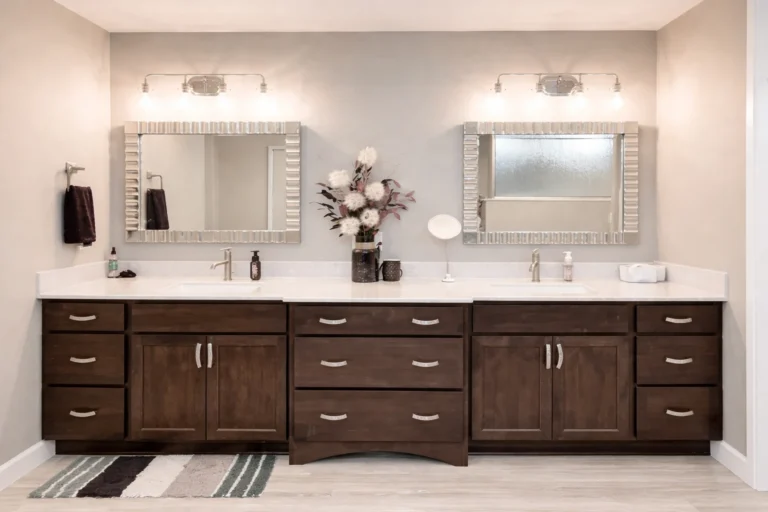
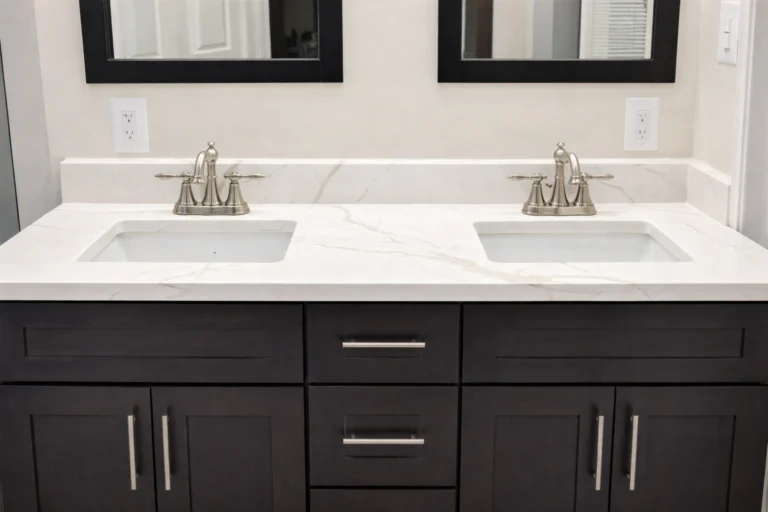
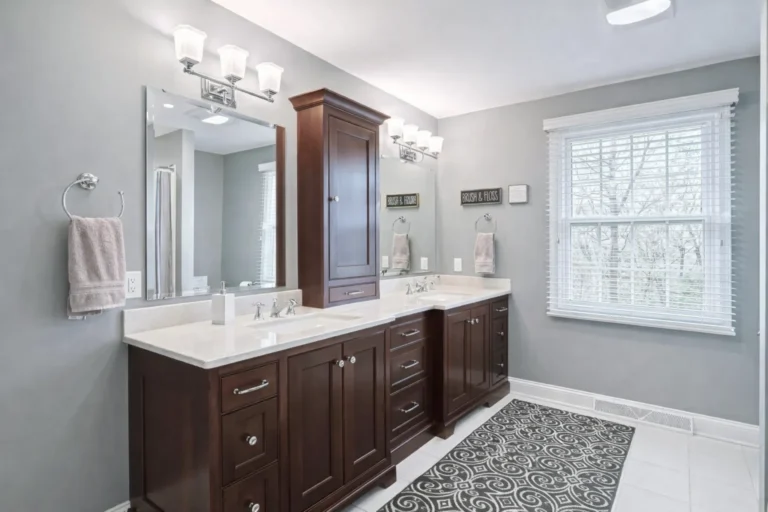
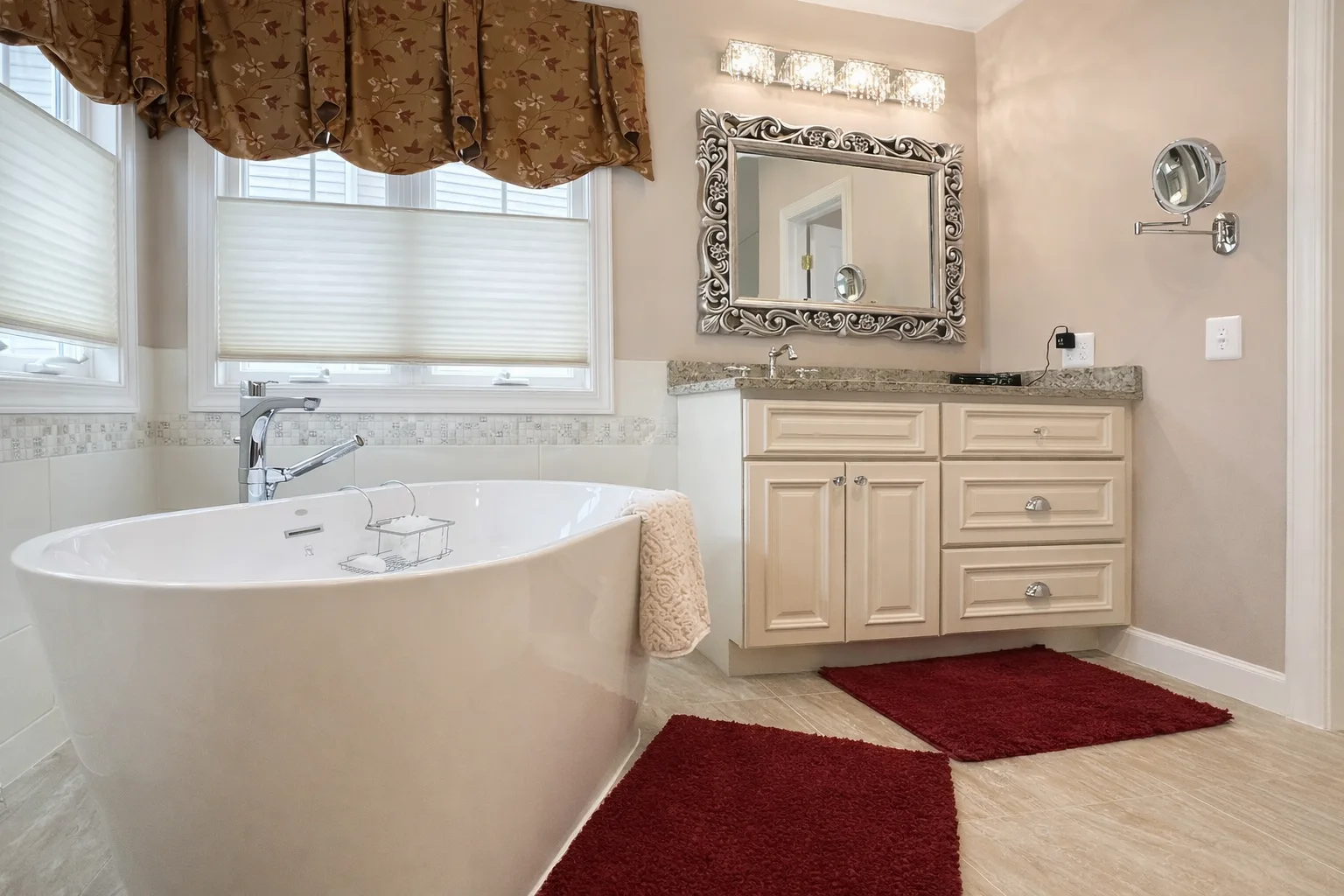
Even if your vanity is not the single highest expense, it remains central to your bathroom’s form and function. Well-planned vanity styles can significantly improve storage, streamline your daily routine, and increase resale appeal. The vanity can be as important stylistically as your tile choices.
Depending on the scope of your design, you may consider custom cabinetry or a premade unit. For instance, older homes lacking standard dimensions often require a custom fit. That means carpenters, joiners, or specialized contractors will need extra time to measure, cut, and install. Water-resistance is also essential, since poorly protected wood can warp or rot in a humid bathroom. To get more insight on vanity options, check out is it cheaper to buy or build a bathroom vanity?.
When budgeting for vanity installation, you should also plan for possible plumbing relocations. In some cases, shifting your sink even a few inches to gain storage can demand extra pipe work. If you are curious about whether you can tackle this yourself or need professional assistance, see do i need a plumber to install a new vanity?. The combination of skilled labor and high-quality materials can push vanity expenses higher than you expect, though still often coming in below the extensive tile or plumbing overhaul.
If you want to explore how vanity costs fit into an overall budget, read how much should you spend on a bathroom vanity?. Additionally, if you are curious about more budget-conscious renovations, take a look at what does a $10000 bathroom remodel look like?.
Keep your budget balanced
Large renovations can feel daunting, but a few thoughtful steps let you manage costs effectively. First, ensure you have at least a 10 percent contingency in your budget. As older homes in Baltimore often hide hidden issues, like mold behind walls or faulty wiring, you may need that buffer. Second, plan your remodel timeline carefully. If you need to relocate the toilet or shower, make that decision early so your contractor can arrange the plumbing work efficiently. Delays and changes mid-project can lead to expensive re-tiling or repeated electrical labor.
You can also discuss design decisions with your contractor before selecting final finishes and fixtures. The price difference between mid-range and top-tier materials can be dramatic, and you might find a lower-cost tile or faucet that still aligns with your desired style. Investing in durable, code-compliant upgrades may save you future repair bills, making it worthwhile to stick with reputable professionals and high-quality materials, especially in older builds.
Finally, remember the overall payoff. A carefully orchestrated remodel can help modernize your bathroom, prevent future water damage, and boost resale value. According to TradeMark Construction, a standard bathroom remodel can range from $30,000 to $40,000 depending on scope and strategy (TradeMark Construction). The wet area, especially your shower, often provides the greatest return on investment if done correctly. A new vanity also updates your space’s look and storage, making everyday life easier and more visually appealing.
By focusing on strong planning, prioritizing labor-intensive work, and striking a balance between aesthetics and function, you can navigate the most expensive parts of a bathroom remodel without sacrificing quality. Ultimately, tile and plumbing might top the cost list, but every design element—especially your vanity—will play its part in shaping both your budget and your finished space.