

REQUEST YOUR CONSULTATION NOW







In Baltimore, glass shower doors transform dated bathrooms into modern, water-tight retreats, especially in Canton, Fells Point, and Federal Hill rowhouses. We install frameless and semi-frameless glass doors for shower installation projects, walk-in showers, tub conversions, and master bath upgrades throughout the city.
Expect a custom measurement visit, 3–5 day turnaround from template to install, and licensed installers who handle all hardware. As a full-service bathroom remodeler, we coordinate glass with tile, plumbing, and ventilation so your shower works as one sealed system.
Homeowners in Canton, Fells Point, and Federal Hill often replace shower curtains or fix leaks from worn door seals. Frameless glass creates a watertight barrier that protects grout, drywall, and subfloor from Baltimore’s high indoor humidity. Water damage spreads fast when seals fail.
Older Baltimore rowhomes often have shallow shower pans. Custom glass doors route water to the drain without overspray onto wood floors. We measure your shower opening and threshold height to spec doors that contain water fully. Glass panels extend high enough to block spray but allow ventilation above.
Sealing matters most at the base and hinges. We install u-channels at the threshold and apply silicone at every glass-to-tile joint. Hardware mounts through tile into studs for strength. You get a door that swings smoothly and keeps water where it belongs.
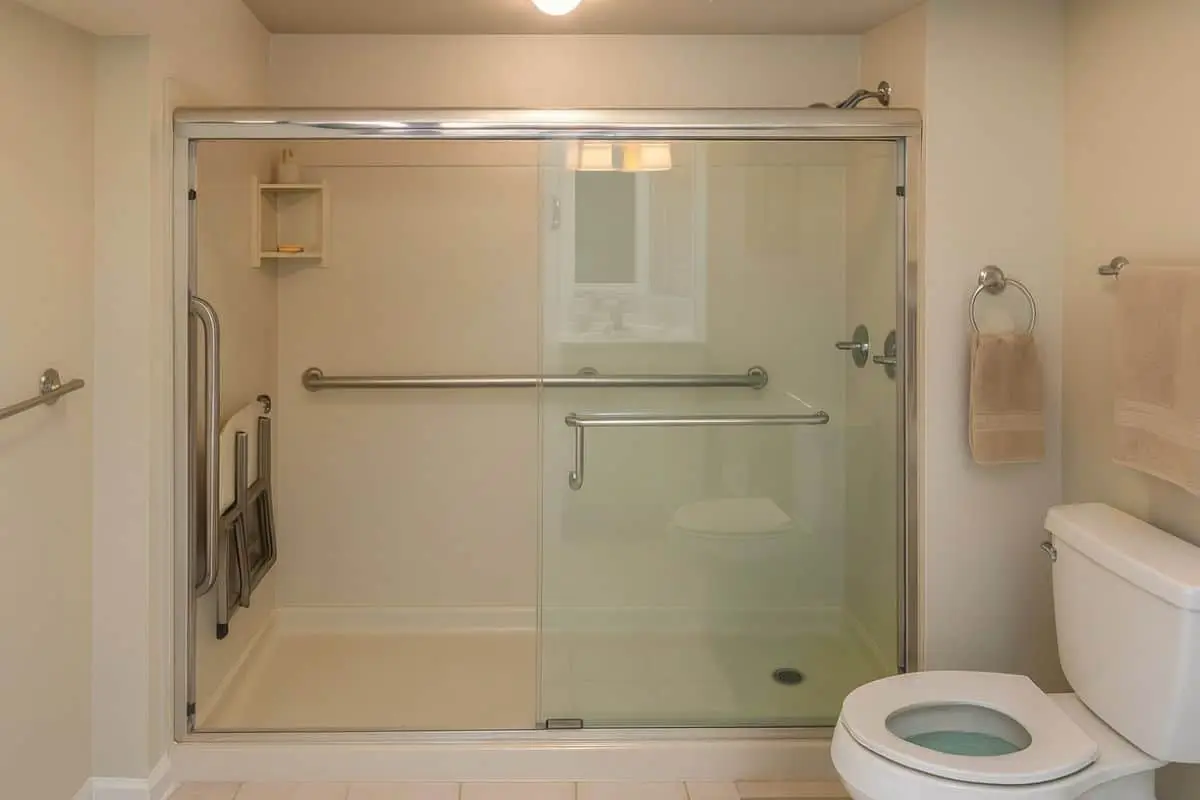
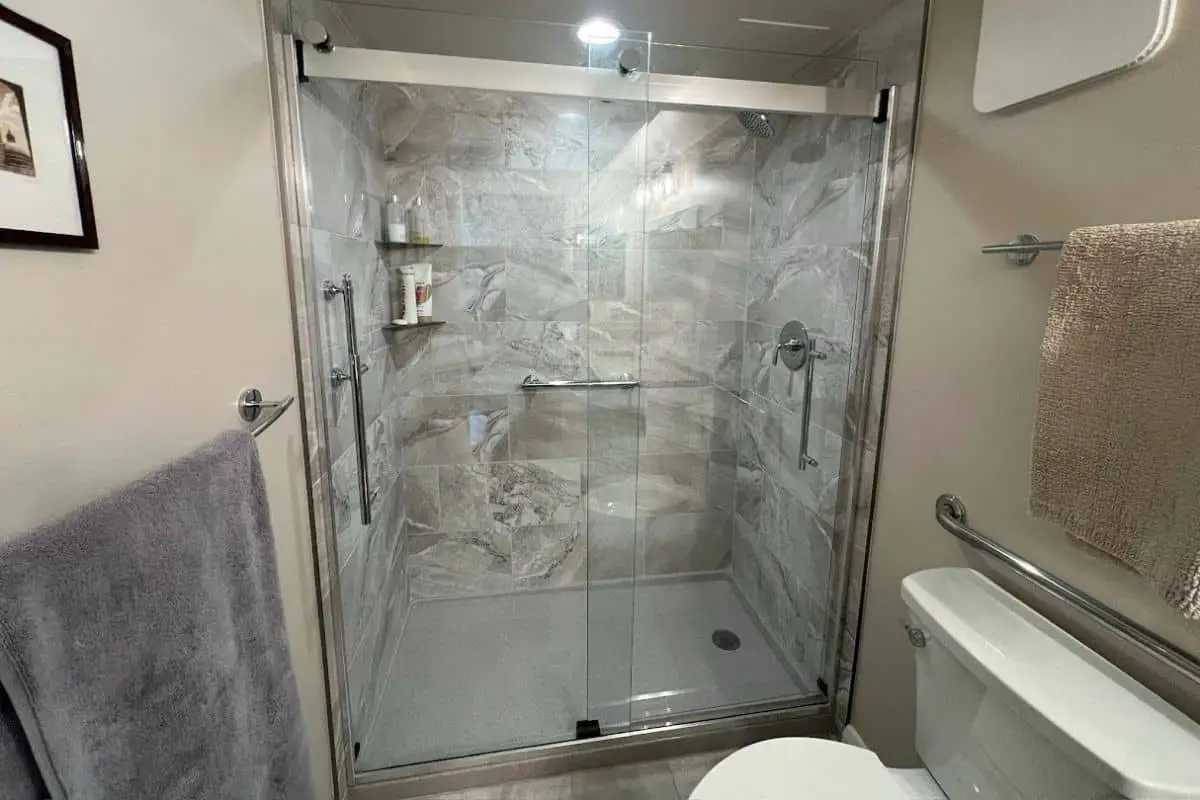
Homeowners in Towson and Lutherville choose between minimalist frameless and budget-friendly semi-frameless doors based on resale appeal and bathroom layout. Frameless doors eliminate metal tracks that trap mold, offering clear glass, simple hinges, and clean lines. Semi-frameless adds a perimeter frame that works well in homes with settling foundations, the frame provides extra support and hides minor wall imperfections.
Baltimore County code requires tempered safety glass. We source 3/8″ and 1/2″ panels that meet ANSI Z97.1 impact standards. Frameless doors use thicker glass (1/2″) because there’s no frame for support. The extra thickness prevents flexing when the door swings. Semi-frameless works with 3/8″ glass since the metal frame carries some weight and adds rigidity.
Frameless doors cost more but showcase tile and fixtures without visual clutter, making small bathrooms feel larger. Semi-frameless hides minor wall irregularities behind the frame at a lower price point. Both styles seal water equally well when installed correctly, your choice depends on budget, bathroom style, and wall condition.
We help you pick based on your shower opening width and tile finish. Narrow openings (under 36″) often do better with semi-frameless because the frame adds stability. The metal channel prevents the door from twisting over time. Wide openings (48″+) benefit from frameless design to avoid a heavy visual look. A large frameless door becomes a design feature rather than a barrier.
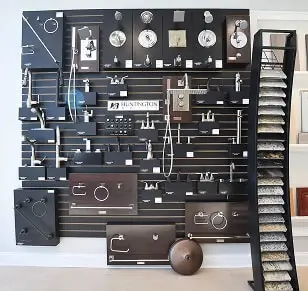
Hardware finish affects the final look. Frameless doors typically use chrome, brushed nickel, or oil-rubbed bronze hinges and handles. Semi-frameless frames come in matching finishes. We coordinate hardware with your faucets and fixtures for a unified bathroom design. Most homeowners match their shower valve trim to avoid mixing metals.
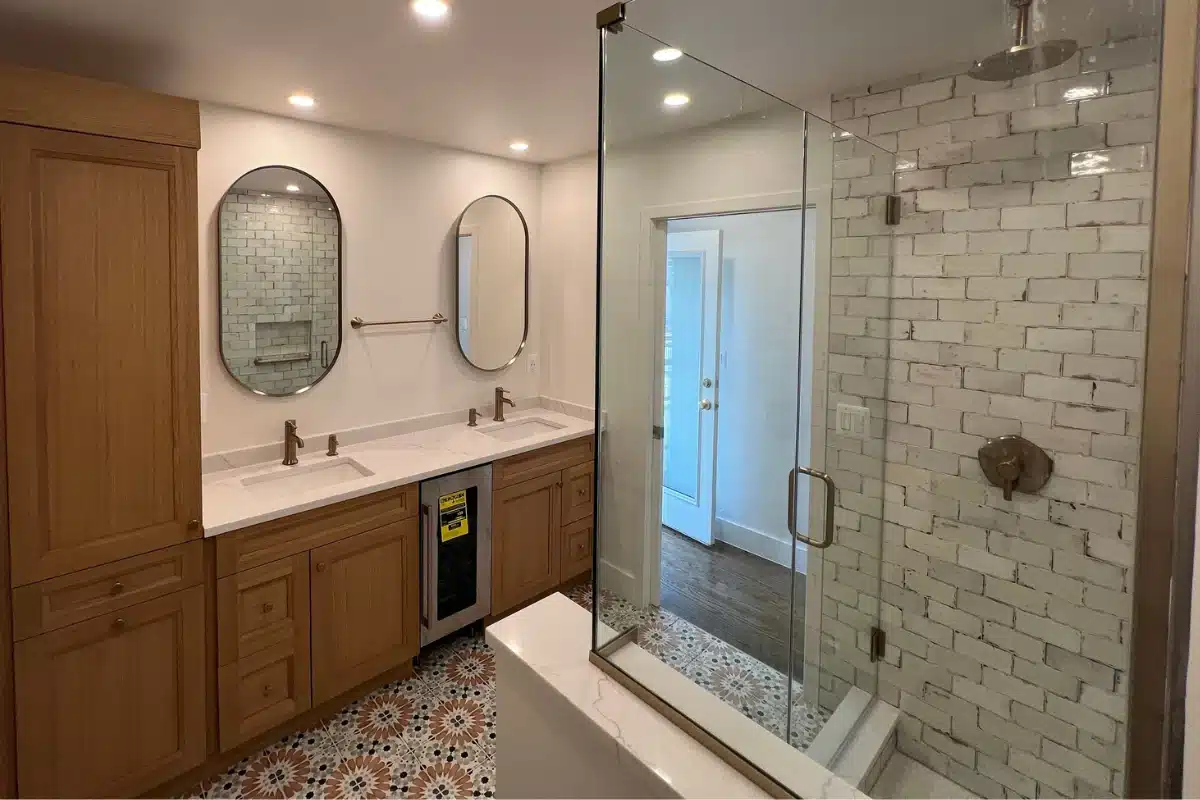
Families in Catonsville and Parkville convert tubs to walk-in showers for aging-in-place or young children. Custom glass panels accommodate narrow rowhouse bathrooms (36″–48″ wide) and corner neo-angle designs in suburban master suites. Walk-in showers save floor space and eliminate the step-over hazard of tubs.
If you’re considering a tub to shower conversion, we template around Baltimore’s common 12×12 ceramic tile and adjust for uneven plaster walls in pre-1950 homes. Rowhouse bathrooms often have walls that aren’t perfectly square. Our installers measure at multiple heights to catch any tilt or bow. Glass panels get custom-cut to match your actual wall angles.
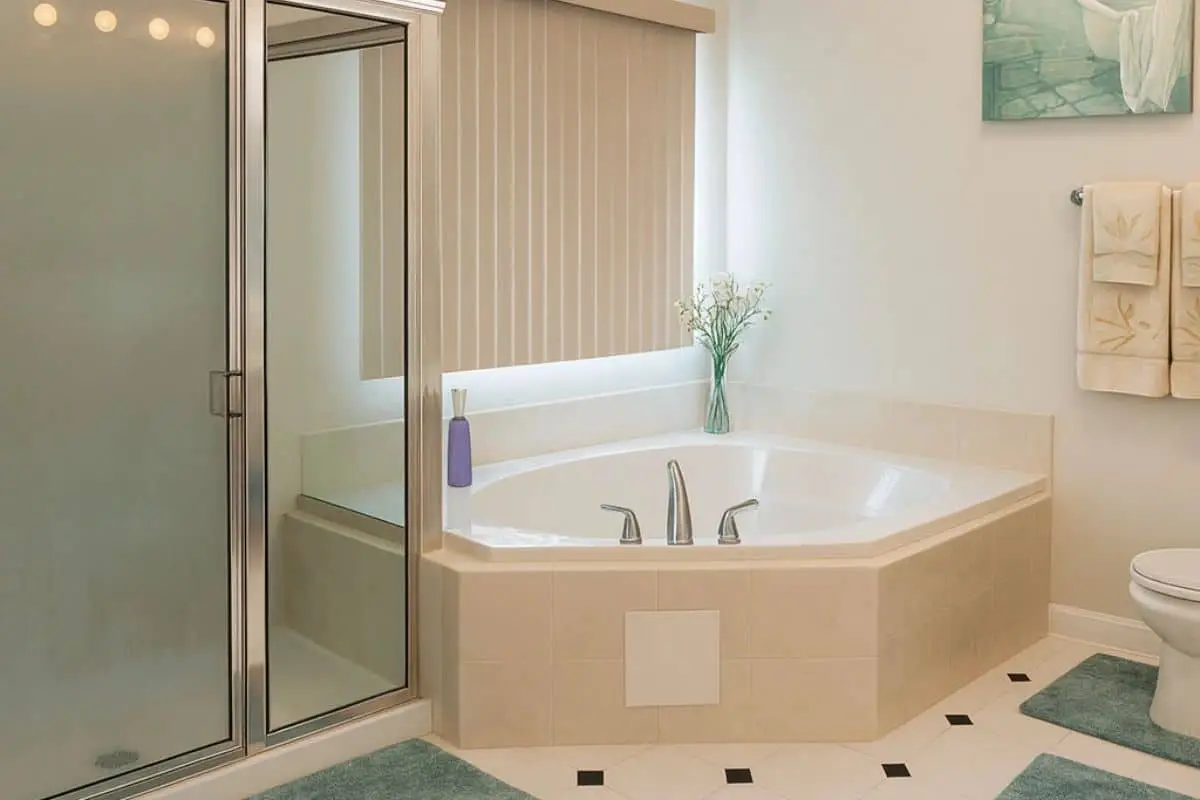
Corner showers use angled glass that opens up tight bathroom layouts. Suburban master baths often have room for full walk-in enclosures with benches. We coordinate glass install with tile installation teams so grout cures fully before we drill mounts.Glass arrives after tile work finishes but before final plumbing trim.
Curbless walk-in showers need careful slope planning. The floor must pitch toward the drain to prevent water from rolling out. We verify slope before templating glass. If your bathroom can’t support curbless design, we build a low threshold (2″–4″) that’s easier to step over than a standard tub wall.
Property managers in Homeland and Roland Park swap fogged, leaking framed doors before tenant turnover or home inspections. New glass and fresh silicone seals stop water from seeping behind walls, where mold thrives in Maryland’s 70%+ summer humidity. Old seals crack and peel after years of hot water exposure.
Spring and fall condensation accelerates seal breakdown. We recommend replacement every 12–15 years in coastal Mid-Atlantic homes. Fogged glass means moisture trapped between panes. That fog won’t wipe away because it’s inside the glass sandwich. Frameless doors avoid this issue with single-pane tempered glass.
Leaking doors damage more than just walls. Water that escapes the shower soaks into bathroom floors and seeps down to ceilings below. We check subfloors during template visits to catch hidden rot. If wood feels soft, we flag it for repair before glass is installed.
Replacing doors costs less than fixing water damage. New hardware mounts into solid backing. We remove old silicone completely and apply fresh beads at every seam. Your new door will seal tight for another decade or more with basic maintenance.
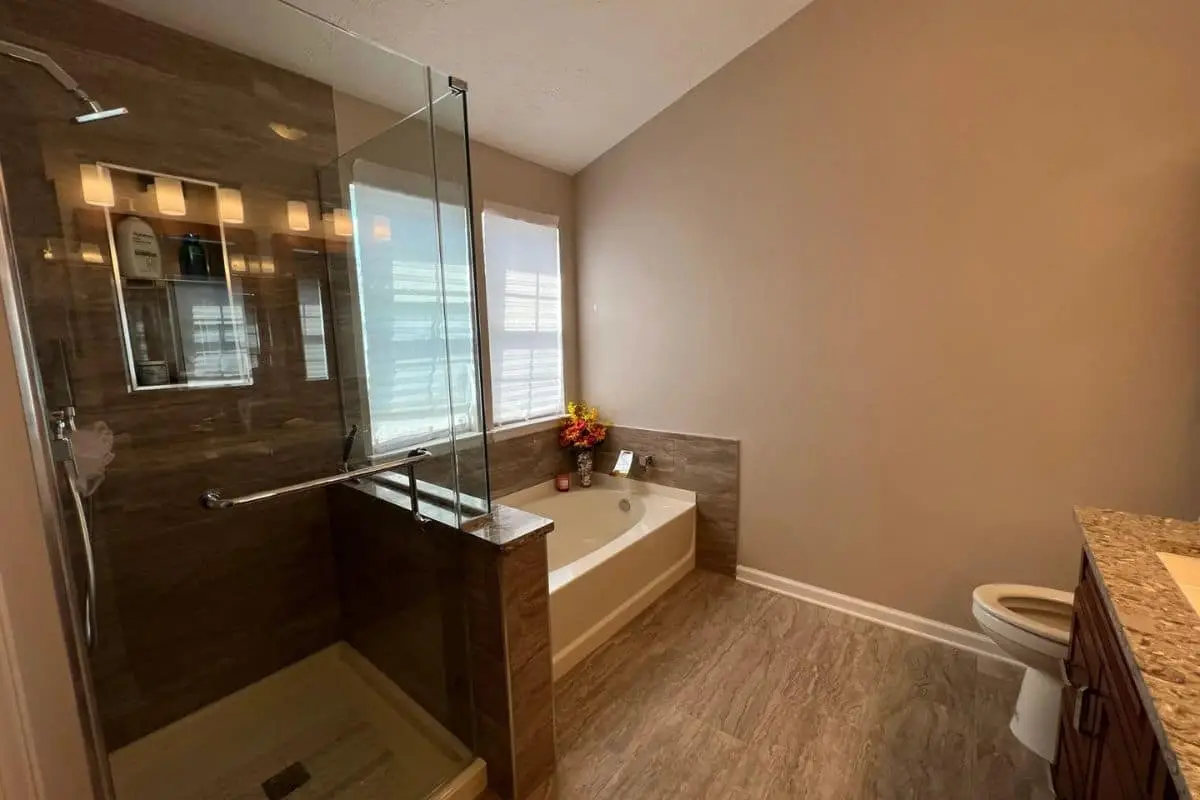
Contractors in Ellicott City and Columbia coordinate glass install after tile setters finish but before final plumbing trim. On-site templating accounts for out-of-square corners, sloped floors, and offset drains so doors swing freely and seal tight. We don’t rely on rough measurements taken weeks before the tile goes in.
Baltimore’s brick and stone foundations settle unevenly. Walls built plumb twenty years ago may have shifted an inch or more. We shim clamps and adjust hinges to keep doors plumb over time. Template visits happen after tile cures (7–10 days) so panels fit the finished surface.
Our template marks hinge locations, handle height, and any fixed panels. We photograph tile patterns to match grout lines if your door includes a panel that sits on the curb. Glass fabrication takes 3–5 days. Installers return with finished panels, mount hardware, and seal all joints in one 2–3 hour visit.
Fixtures like shower controls and spouts affect glass placement. We map their locations during templating so doors don’t hit handles when they swing. Some bathrooms need notched glass to clear wall-mount fixtures. We discuss these details before fabrication starts so there are no surprises on install day.
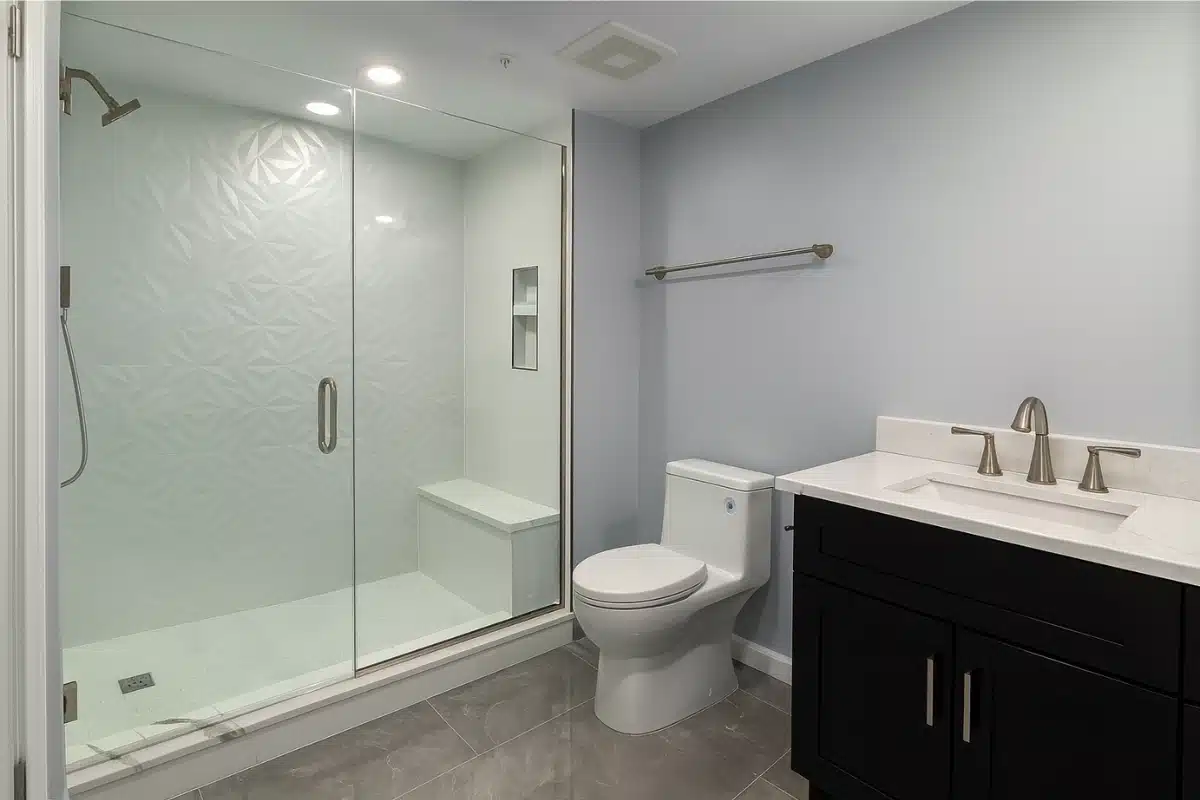
In-home meeting (up to 2 hours) to understand project vision, discuss feasibility, style, materials, and ballpark budget
Detailed design work, CAD drawings, site analysis, structural evaluation, mechanical/electrical assessment, and preliminary designs
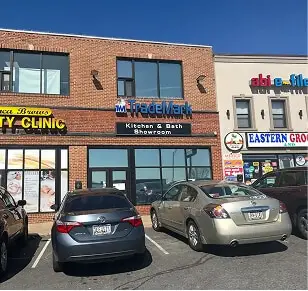
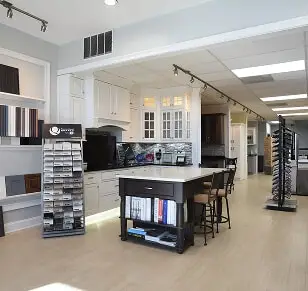
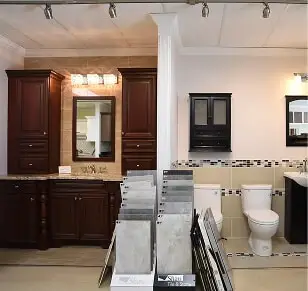
Clients visit their on-site showroom where the design team helps select cabinets, countertops, appliances, flooring, fixtures, lighting, and tile within budget parameters
Scope and budget finalized, Construction Agreement created, target dates set, permits filed
Follows detailed written building processes with step-by-step procedures
Owner Vasilios personally conducts a detailed walk-through to ensure satisfaction
Permit not required for door-only replacement. Full shower remodel needs mechanical and plumbing permits per Baltimore City building codes.