

REQUEST YOUR CONSULTATION NOW






In Baltimore, homeowners upgrade kitchen lighting to fix a common problem: you can’t see what you’re cooking. After 25 years working in Baltimore kitchens, we’ve learned that poor lighting makes even beautiful kitchens hard to use. We install under-cabinet lights, recessed fixtures, pendant lights, and task lighting in rowhouses, older homes, and modern kitchens across Charm City.
Our team handles wiring, fixture placement, and safe installation. We work with licensed electricians to meet Baltimore City code requirements. Schedule a visit to discuss your lighting needs.
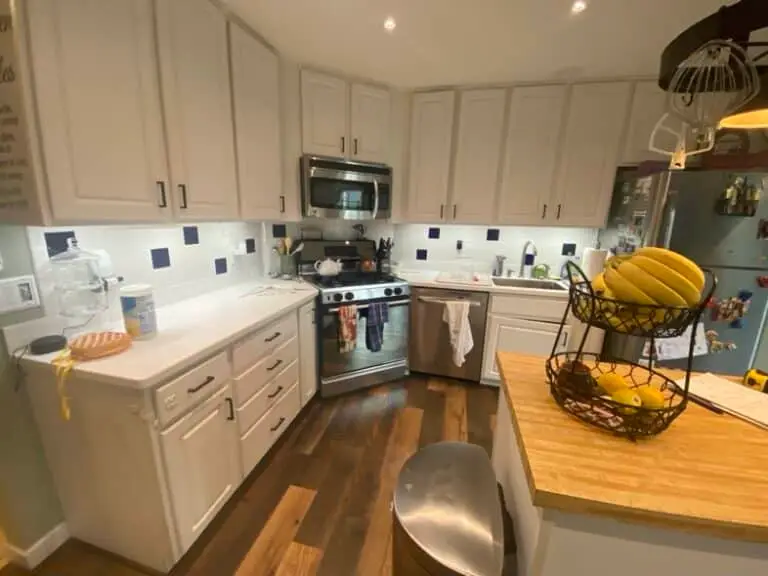
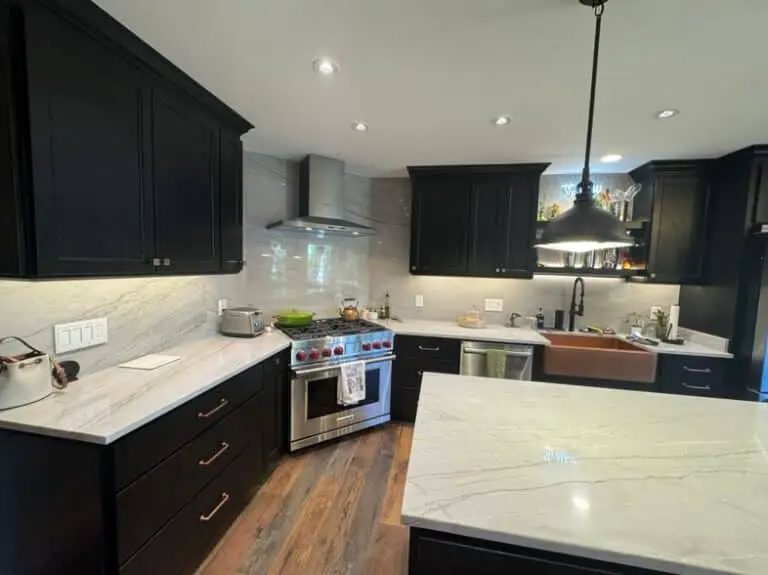
Homeowners in Canton and Fells Point add under-cabinet strips to brighten dark counters. We see this problem constantly in Baltimore rowhomes. You’re chopping vegetables at night and can’t see what you’re doing because your body blocks the overhead light. LED strips remove shadows where you chop, measure, and prep food.
Older Baltimore kitchens often lack outlets near backsplashes, so we run new circuits. We check your electrical panel before adding new lighting circuits. Here’s what most homeowners don’t know: some rowhomes need panel upgrades to handle extra electrical load safely. We’ve walked into homes where the panel was maxed out before we even started.
You can pick hardwired or plug-in options based on your cabinet setup and electrical access. Hardwired systems hide all wiring inside walls and cabinets for a clean look. In our experience, homeowners who go with hardwired installations are happier long-term because there are no visible cords.
Many Baltimore rowhouses have plaster ceilings or tight joist space for recessed cans. We map fixture placement to avoid structural beams and old knob-and-tube wiring. Our electricians use stud finders and inspection cameras to find safe installation spots. We’ve been doing this long enough to know that what looks simple on paper gets complicated when you open up a 100-year-old ceiling.
Slim LED recessed lights fit shallow ceiling spaces common in Formstone-fronted rowhomes and brick homes near Patterson Park. Standard recessed cans need six to eight inches of clearance above the ceiling. Slim fixtures work in spaces as shallow as two inches. We recommend slim fixtures for almost every historic home we work on because they save us from major structural work.
Good spacing creates even light across galley kitchens and open layouts. We place fixtures four to six feet apart for balanced coverage. One thing we’ve learned: homeowners always think they need more lights than they actually do. We help you find the right balance so your kitchen feels bright without feeling like a hospital.
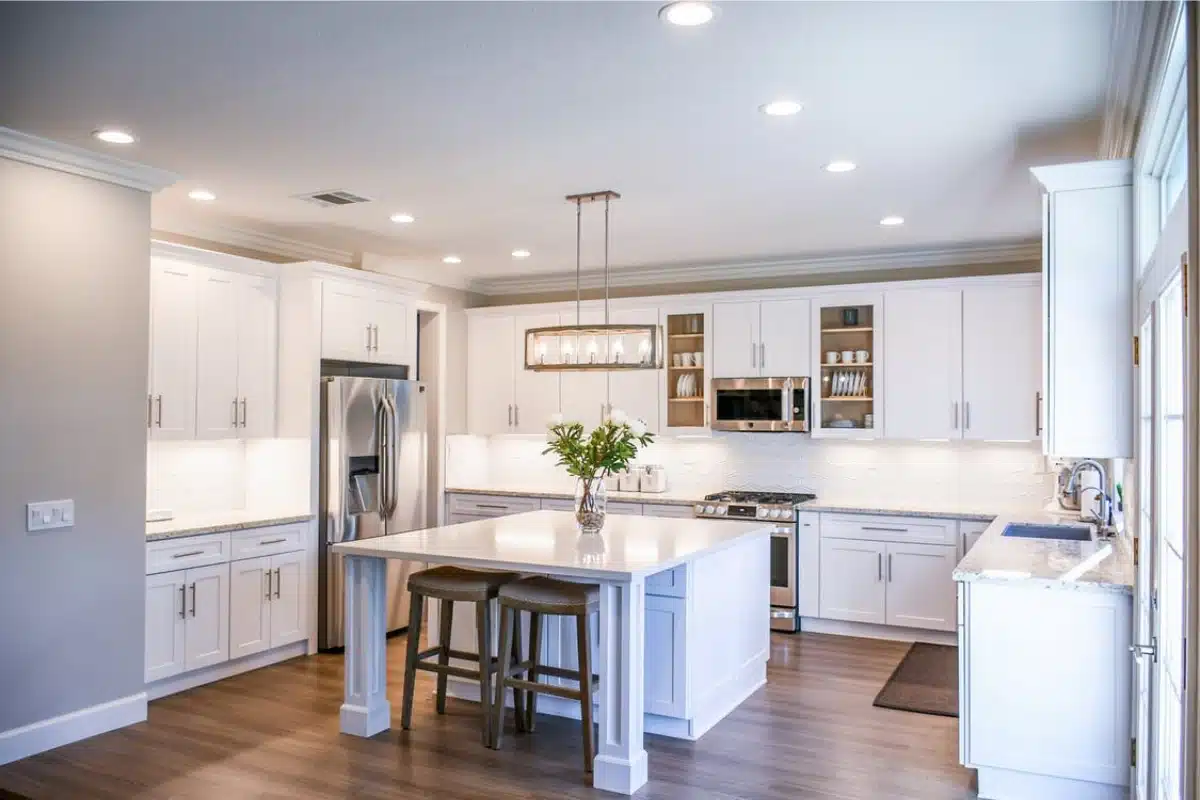
Homeowners in Federal Hill and Mount Vernon use pendant lights to define island zones. We install junction boxes in the ceiling and run wiring from circuits or panels. Each pendant needs a rated electrical box that holds the fixture weight. We’ve seen DIY pendant installs fail because someone hung a heavy fixture on a box rated for ceiling fans only.
Fixture height sits 30 to 36 inches above countertops to avoid hitting your head. Here’s our advice: stand at your island and hold your arms out like you’re working. That’s how we figure out the perfect height for your family.
Dimmer switches let you change brightness for cooking or having guests over. Bright settings work well for meal prep and homework. Lower settings create mood lighting for dinners and crab feasts. After installing thousands of pendants, we can tell you that dimmers are worth every penny. You’ll use them more than you think.
A complete lighting plan in Baltimore includes overhead fixtures, under-cabinet strips, and focused task lights. Professional lighting design uses three layers that work together. Most homeowners don’t realize this when they start, but single-source lighting never works well in kitchens.
Ambient lighting from recessed cans or flush-mount fixtures lights the whole room. This general lighting helps you move safely through the space. Most kitchens in Hampden and Remington need four to eight recessed lights for good ambient coverage.
Task lighting targets sinks, stoves, and prep counters. This focused lighting helps you cook, clean, and work safely. Under-cabinet LEDs provide task lighting for counter work. Pendant lights over islands add task lighting for that zone. We tell homeowners to think about where they actually stand when they cook. That’s where task lighting matters most.
Accent lights highlight glass cabinets or open shelving. These lights show off dishes, glassware, and decorative items. Industry standards recommend different brightness levels for general coverage versus work zones. In our opinion, accent lighting is the finishing touch that makes a kitchen feel custom and complete.
When you’re upgrading your kitchen lighting, we match it with kitchen appliance installation to plan electrical loads the right way. We’ve learned the hard way that planning everything together saves homeowners money and headaches.
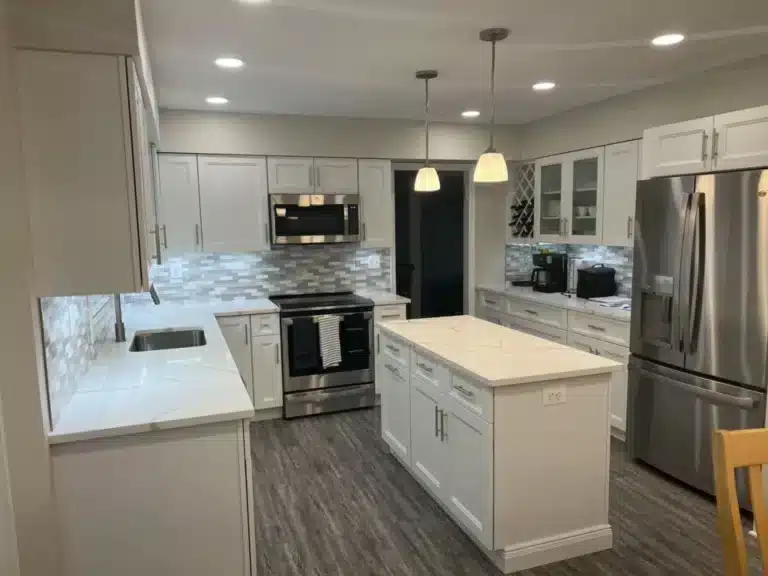
LED fixtures in Baltimore kitchens run 25,000 to 50,000 hours before needing replacement. If you use lights for four hours daily, they last 17 to 34 years. We’ve watched LED technology improve dramatically over our years in business. Early LEDs were expensive and had poor color. Today’s LEDs are affordable and look natural.
Homeowners near The Avenue in Hampden and along Remington Row cut energy bills with LED upgrades. LED lights use 75 percent less energy than old bulbs. A kitchen with eight recessed LEDs costs about $15 per year to run. The same space with old bulbs costs about $60 per year.
Color temperature options range from warm white (2700K) to daylight (5000K). Warm white creates a cozy yellow glow like old bulbs. Neutral white (3000K to 4000K) works well for most cooking tasks. Daylight (5000K) gives crisp white light that shows true colors. Our personal recommendation: stick with 3000K to 3500K for kitchens. It’s warm enough to feel inviting but bright enough to cook safely.
Dimmable LEDs work with most modern dimmer switches for adjustable brightness. You need dimmers rated for LED loads, not old dimmers. Trust us on this: cheap dimmers cause more service calls than any other lighting issue. We only install quality LED-rated dimmers for this reason.
In-home meeting (up to 2 hours) to understand project vision, discuss feasibility, style, materials, and ballpark budget
Detailed design work, CAD drawings, site analysis, structural evaluation, mechanical/electrical assessment, and preliminary designs
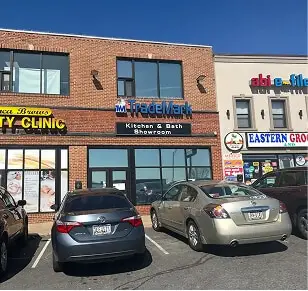
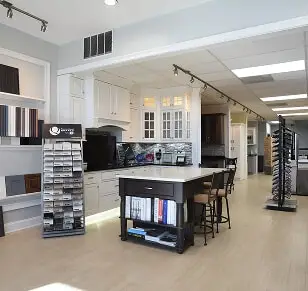
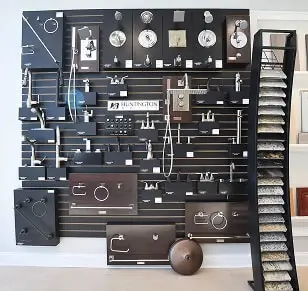
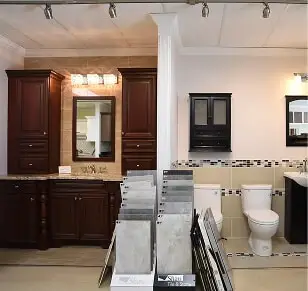
Clients visit their on-site showroom where the design team helps select cabinets, countertops, appliances, flooring, fixtures, lighting, and tile within budget parameters
Scope and budget finalized, Construction Agreement created, target dates set, permits filed
Follows detailed written building processes with step-by-step procedures
Owner Vasilios personally conducts a detailed walk-through to ensure satisfaction