

REQUEST YOUR CONSULTATION NOW







Trademark Construction specializes in open concept kitchen remodeling in Baltimore MD, transforming cramped rowhouses and single-family homes into bright, functional spaces where families gather and entertain. We handle wall removal, structural support, permits, and all finishing work to create seamless layouts that connect your kitchen to living areas.
Most projects take 4-8 weeks from start to finish, and every remodel begins with an in-home consultation to assess your space and discuss your goals. As experienced kitchen remodelers in Baltimore, we manage every detail, from engineering and city permits to cabinets, countertops, and final inspections.
Book a consultation with Trademark Construction to assess which walls in your Baltimore home are load-bearing and require structural support. Our team works with licensed engineers to design steel beams or laminated wood headers that safely carry the weight of upper floors. We handle all permit applications through the Baltimore City Department of Permits and Inspections before demolition begins.
Once permits are approved, we remove non-structural walls first, then install engineered support beams where needed. Our licensed electricians, plumbers, and HVAC technicians relocate utilities to fit your new open layout. We complete the space with flooring, custom cabinets, and countertops that tie the kitchen and living areas together. After final city inspections, you’re ready to enjoy your new open concept kitchen.
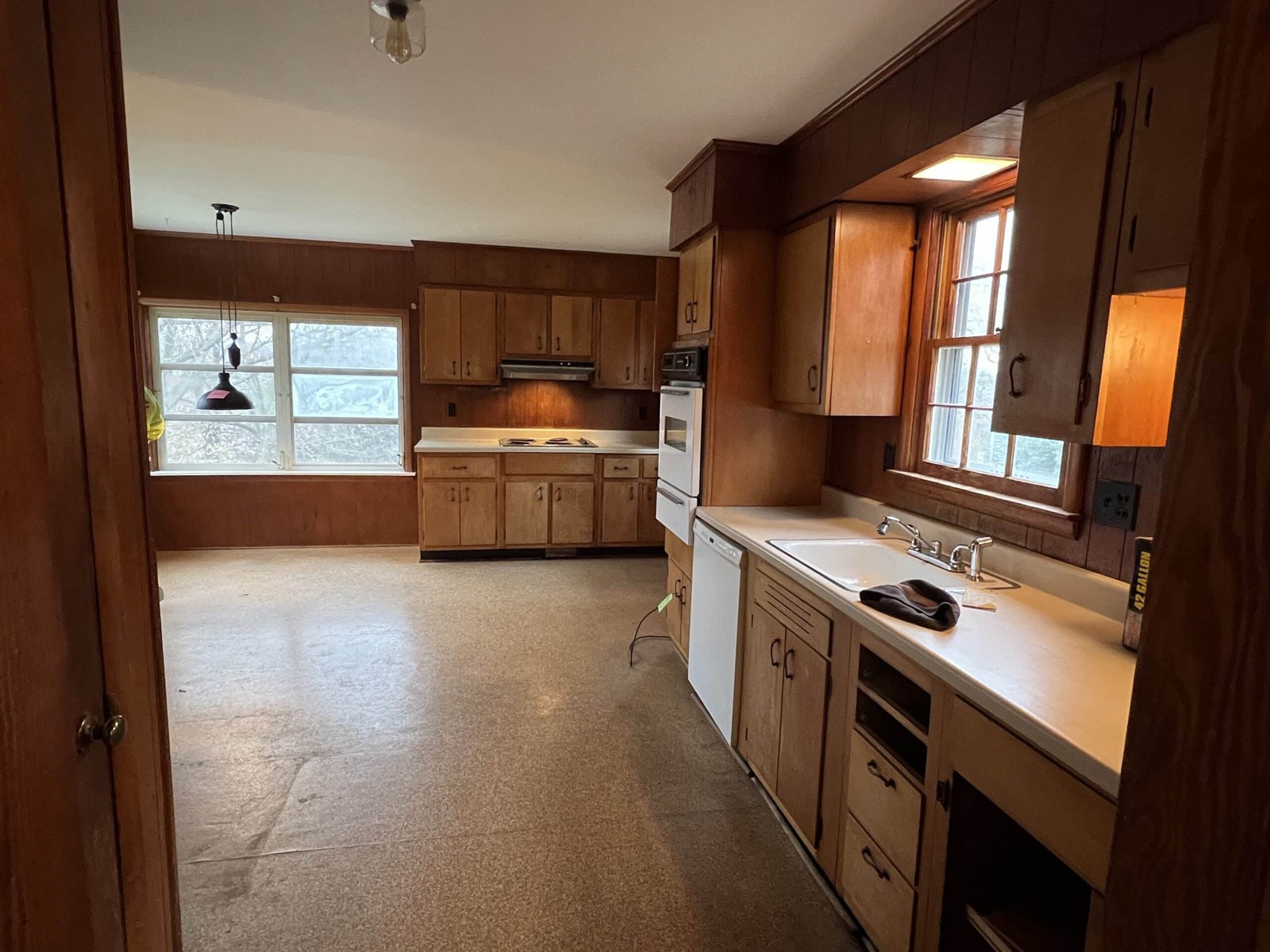
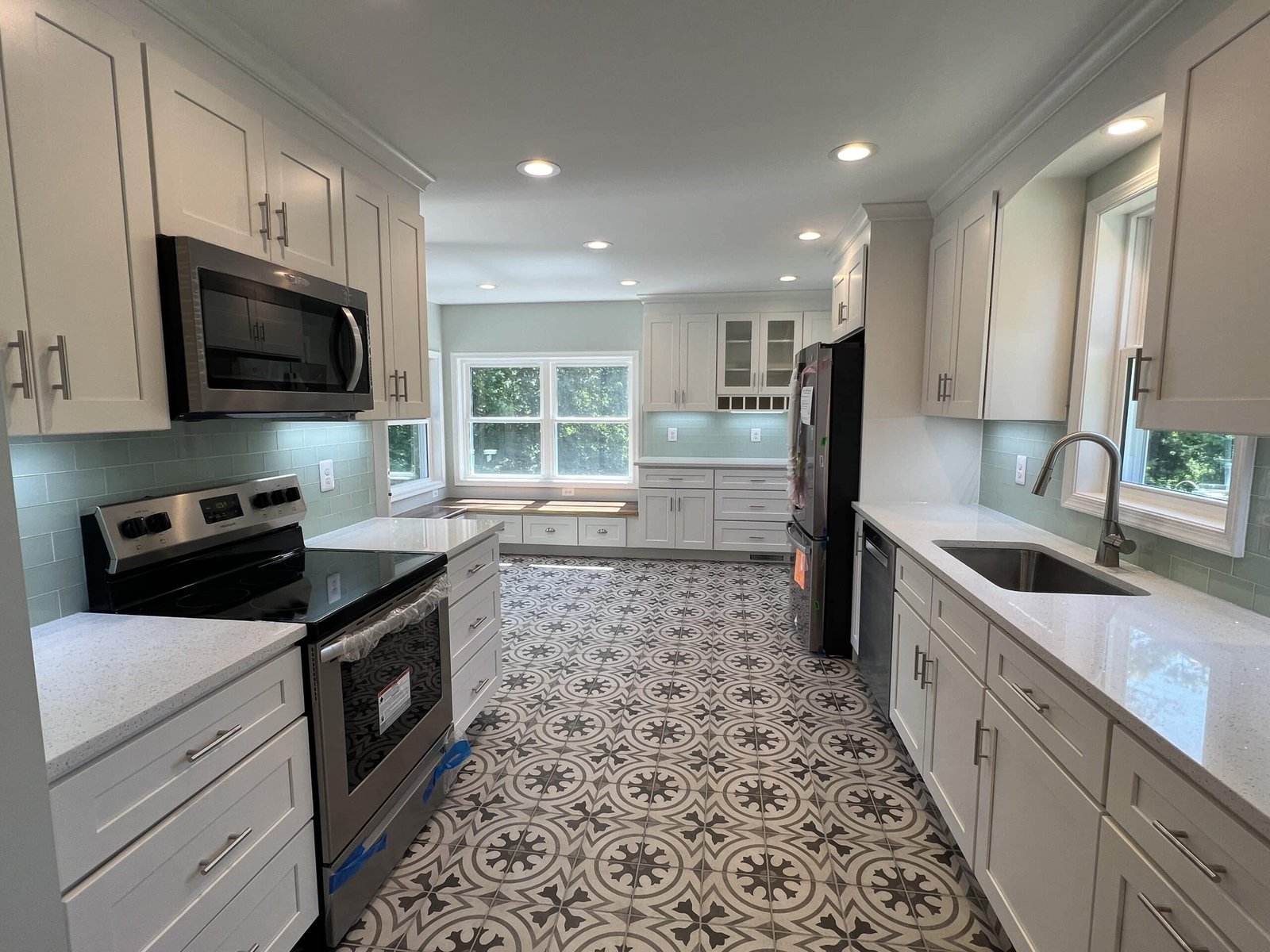
Homeowners in Canton and Fells Point often choose open concept kitchen remodeling to connect cramped galley kitchens with separate dining rooms. Removing the wall between these spaces creates a bright, unified area where families can cook, eat, and spend time together. Natural light from front windows now flows all the way to the back of your home, and you gain 30-40% more usable space without adding an extension.
Baltimore rowhouses built before 1950 typically have thick brick walls that support the floors and structure above. These load-bearing walls require engineered steel beams or laminated wood headers to safely transfer weight after removal. Without proper structural support, walls and ceilings can sag or crack throughout your home.
City permits from Baltimore’s Department of Permits and Inspections take 2-4 weeks to process, so we build that timeline into your project schedule. Trademark Construction handles all permit applications, engineering drawings, and inspections to ensure your wall removal is safe, legal, and structurally sound.
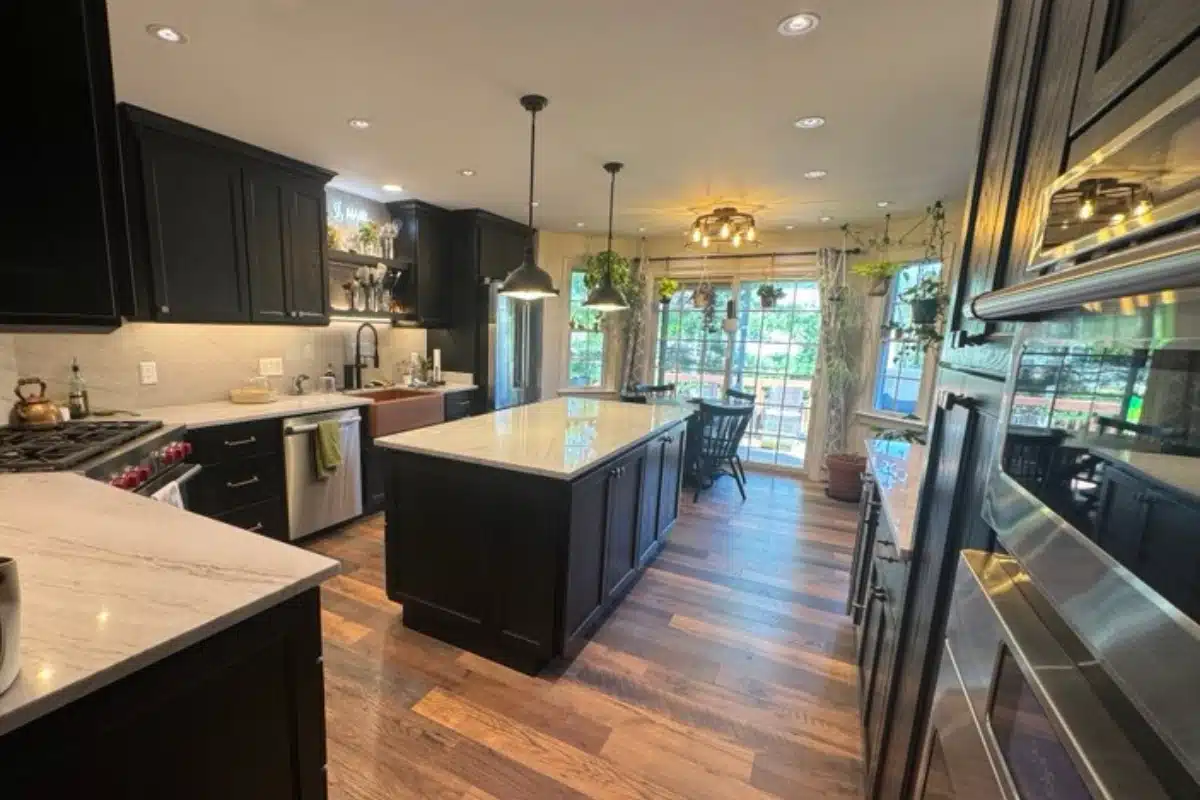
Homeowners in Federal Hill and Locust Point prioritize kitchen islands that face the living room, creating open sightlines for entertaining while cooking. These islands must balance function and flow, housing appliances like dishwashers, offering storage for cookware, and providing clear walking paths that don’t interrupt the cook’s workspace.
Adding seating to your island creates a natural gathering spot for family and friends without blocking movement between the stove, sink, and countertops. Moving the sink or cooktop to the island can also shorten your work triangle, reducing unnecessary steps during meal prep. Three to four bar stools offer casual dining space for quick meals and conversation.
Older Baltimore homes often require reinforced floor joists to support heavy granite or quartz islands that can weigh 500 pounds or more. We inspect your floor structure before installation to ensure it can handle the load safely. In neighborhoods like Patterson Park, homeowners often want to preserve original hardwood floors. We plan cabinet and appliance placement carefully to avoid cutting into historic oak or pine, protecting your home’s character while modernizing the layout.
Homeowners in Hampden and Mount Vernon require safe wall removal that prevents upper floors from sagging and plaster walls from cracking throughout the home. Multi-story homes need precise engineering calculations to account for the weight of bedrooms, bathrooms, and structural loads above. When a load-bearing wall is removed, that weight must be transferred to new support systems.
Engineered steel beams or laminated wood beams redistribute weight from removed walls down to existing foundation piers or newly installed support posts. These beams are custom-sized for your home’s specific structural loads, preventing costly repairs from uneven settling or structural failure. Trademark Construction ensures your open concept kitchen remodeling in Baltimore is structurally sound and built to last for decades.
Baltimore rowhouses built before 1920 typically feature thick masonry party walls shared with neighbors on both sides. These brick walls determine where beams can be placed and how far we can open your space. Some walls cannot be removed at all because they support your neighbor’s structure. Additionally, the clay soil found in many Baltimore neighborhoods expands and contracts with moisture changes, requiring concrete footings below the frost line to keep new support posts stable year-round.
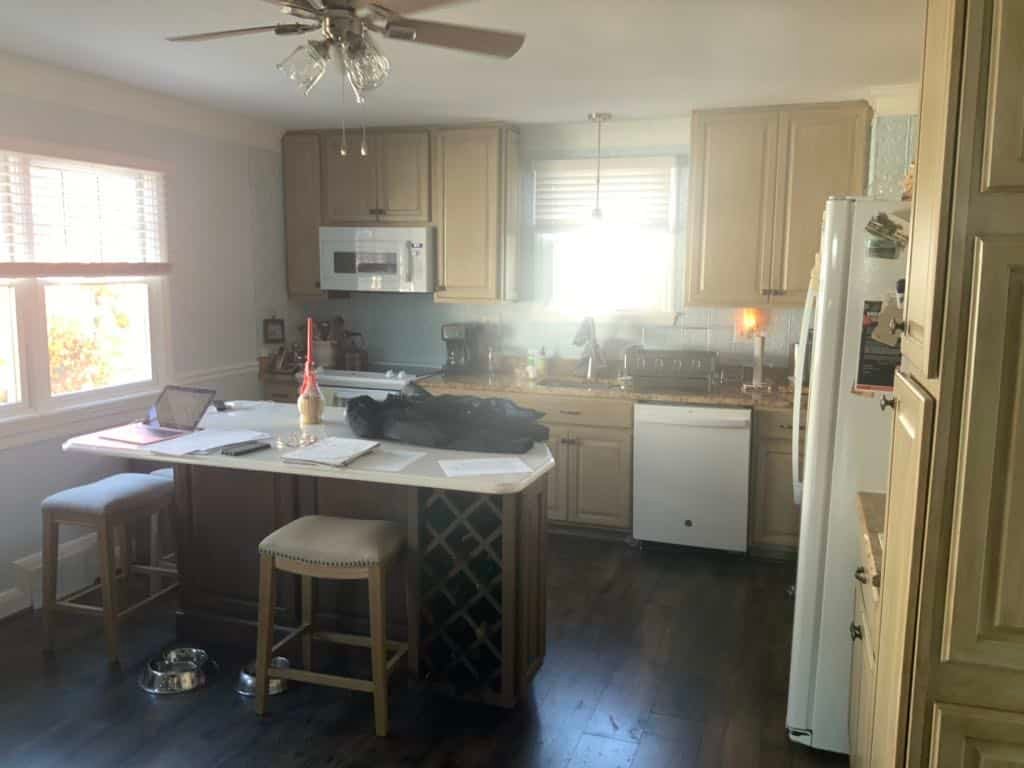
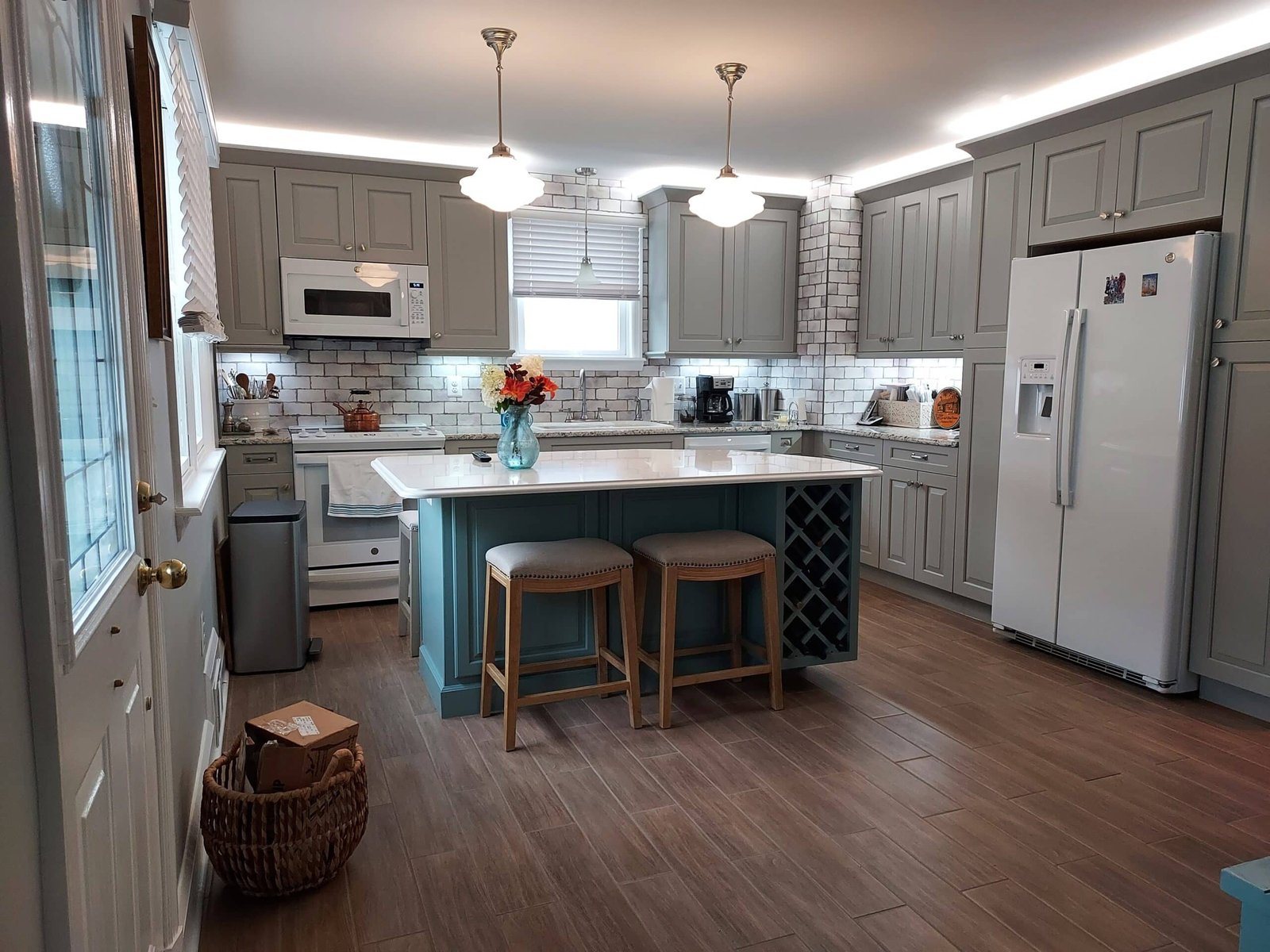
Baltimore homeowners investing in open concept kitchen remodeling choose durable materials that handle daily use, resist moisture, and maximize resale value. We recommend surfaces and finishes that balance style, function, and long-term performance in Baltimore’s humid climate.
Quartz countertops resist stains and scratches better than laminate, lasting 15-20 years or more with minimal maintenance. Soft-close cabinet hinges and full-extension drawer glides prevent slamming and outlast basic hardware by years. Stainless steel appliances and neutral cabinet colors, white, gray, or natural wood tones, appeal to the widest range of buyers, increasing your return on investment when it’s time to sell.
Baltimore’s humid summers, with temperatures regularly in the 80s and 90s, make moisture-resistant materials essential under sinks and around dishwashers. Trademark Construction uses marine-grade plywood and waterproof sealants to prevent mold and water damage in high-moisture areas.
For flooring, hardwood in oak or maple creates a seamless flow between your open kitchen and living spaces without transition strips. Luxury vinyl plank offers a budget-friendly alternative that mimics real wood while standing up better to water spills near the sink and refrigerator. Both options come in dozens of colors to complement your design.
Homeowners in Roland Park and Guilford must obtain city approval before making structural changes or upgrading electrical systems during kitchen remodeling. Unpermitted work can fail home inspections, kill a sale, or result in city fines exceeding $1,000. Proof that all work meets current building codes is required when selling your home.
Trademark Construction handles all permit applications, inspections, and code compliance for your open concept kitchen remodel in Baltimore. We’ve completed hundreds of permits through Baltimore City’s Department of Permits and Inspections and understand exactly what inspectors require at each phase of construction.
Baltimore City requires four separate permits for most open concept remodels: structural permits for beams and load-bearing wall removal, electrical permits for new outlets and lighting circuits, plumbing permits for relocating water and drain lines, and HVAC permits for moving heating and cooling vents. Each permit involves its own application process, fees, and inspection schedule. In historic districts like Bolton Hill, additional design review board approval is required before the city issues standard permits, adding 2-3 weeks to the timeline while protecting the neighborhood’s architectural character.
In-home meeting (up to 2 hours) to understand project vision, discuss feasibility, style, materials, and ballpark budget
Detailed design work, CAD drawings, site analysis, structural evaluation, mechanical/electrical assessment, and preliminary designs
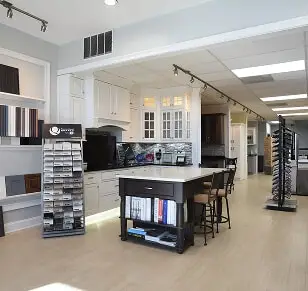
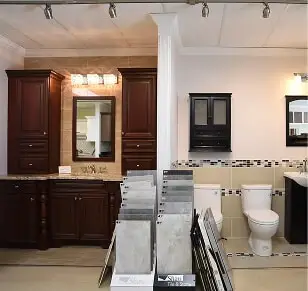
Clients visit their on-site showroom where the design team helps select cabinets, countertops, appliances, flooring, fixtures, lighting, and tile within budget parameters
Scope and budget finalized, Construction Agreement created, target dates set, permits filed
Follows detailed written building processes with step-by-step procedures
Owner Vasilios personally conducts a detailed walk-through to ensure satisfaction
Spring months from April to June and fall months from September to November offer mild weather. This makes it easier when walls are open and for delivering heavy materials like cabinets.
Most Baltimore projects finish in 6-8 weeks after the city approves all permits and we can start demolition work.