

REQUEST YOUR CONSULTATION NOW







Your Baltimore kitchen floor is worn, water-damaged, or outdated, and you need a replacement that won’t disrupt your life for weeks. We specialize in kitchen flooring replacement across Baltimore, from Hampden rowhomes to Federal Hill historic homes.
Most projects finish in 2-4 days, including subfloor prep, material installation, and final cleanup. We handle permits, work around your cabinets to save you thousands, and protect your appliances throughout the process. Ready to upgrade your kitchen? Let’s talk about your flooring options.
New kitchen floors shouldn’t mean ripping out your cabinets. We install flooring around existing cabinet bases, saving you $3,000-$5,000 in removal and reinstallation costs. Our team uses precision oscillating tools to cut tight to your toe-kicks without damaging cabinet frames or countertops.
Baltimore’s older rowhomes often have uneven subfloors, a result of decades of settling and moisture exposure. After removing your old floor, we check for dips, high spots, and water damage near sinks or dishwashers. If needed, we replace damaged sections with new plywood and apply a leveling compound to create a flat surface. This prep work prevents your new floor from cracking or flexing under daily use.
Homeowners in Hampden and Canton choose this approach when they want updated floors without a full kitchen teardown. We measure your cabinet-to-subfloor gap to ensure your new flooring fits perfectly. If your cabinets sit directly on the old floor, we install transition strips at the toe-kick for a clean finish. Most projects wrap up in 2-3 days, giving you a fresh kitchen floor without the disruption of a complete kitchen remodeling project.
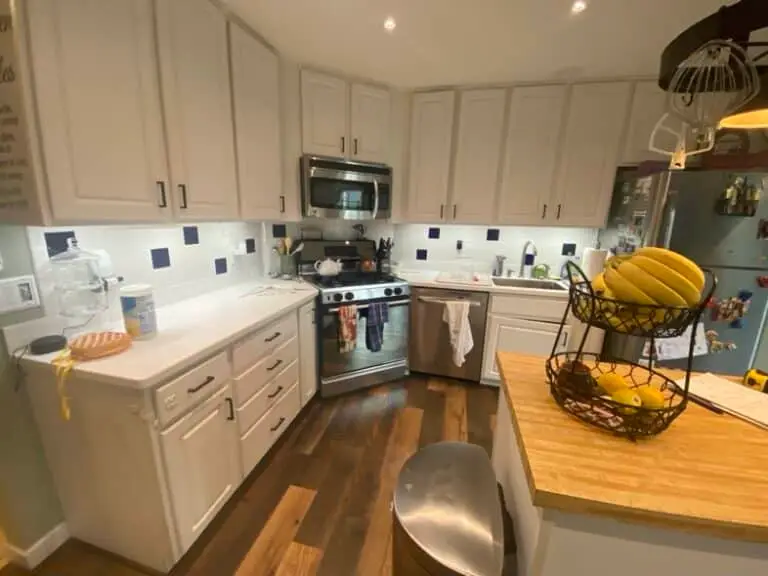
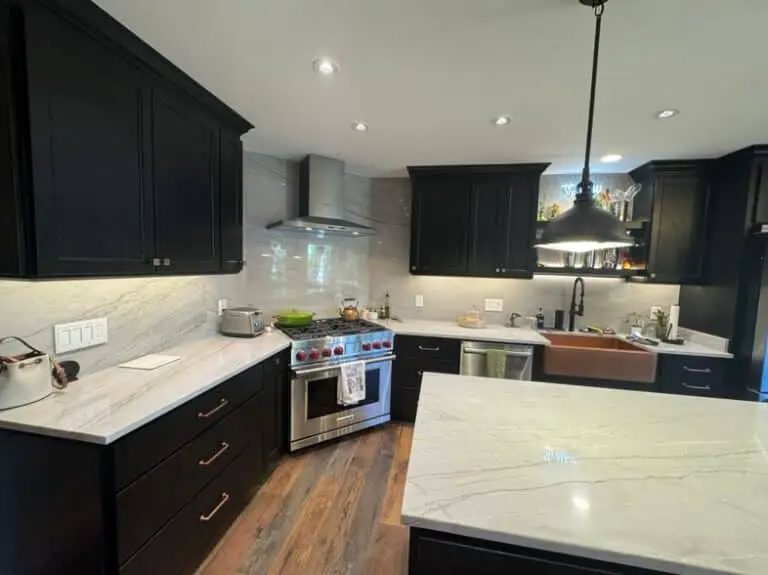
Your kitchen sees daily cooking, spills, dropped pans, and pet traffic. You need flooring that withstands all of it without cracking or warping. Porcelain tile and luxury vinyl plank (LVP) are our top recommendations for Baltimore kitchens, both handle humid summers and resist water damage near sinks and dishwashers.
Baltimore’s climate creates unique challenges. Basements stay damp year-round due to our proximity to the Chesapeake Bay, and that ground moisture can seep upward into kitchen floors. We install waterproof underlayment below vinyl planks and cement backer boards under tile to block moisture and prevent mold growth, even during our humid July and August peak.
Homeowners in Federal Hill and Mt. Washington chose porcelain tile for high-traffic kitchens because it lasts 20-25 years with minimal maintenance. Luxury vinyl plank offers a budget-friendly alternative that installs faster and still delivers excellent durability. Both materials come in styles that complement modern cabinets or Baltimore’s historic woodwork.
We bring samples to your home so you can see how colors and textures look under your actual kitchen lighting. As experienced kitchen remodelers in Baltimore, we guide you toward flooring that fits your cooking habits, home style, and budget.
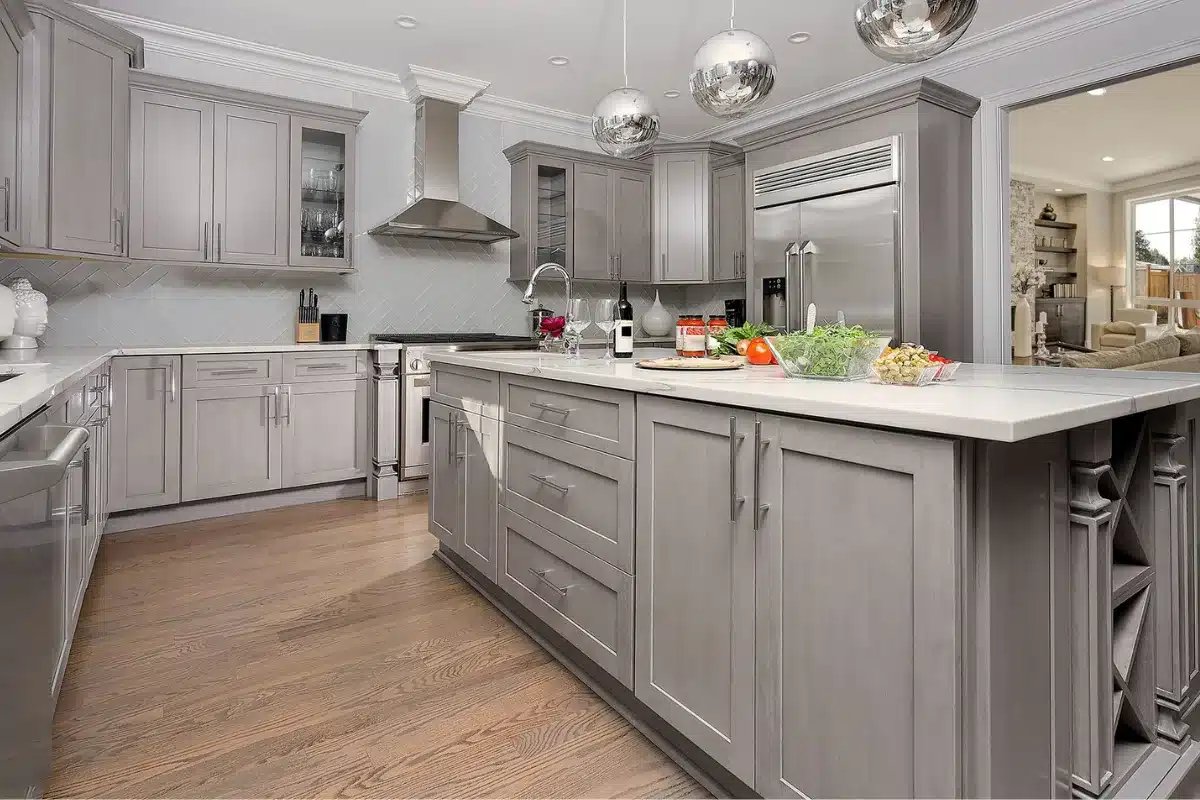
A smooth installation starts with good preparation. Clearing furniture and disconnecting appliances the night before saves half a day of installation time. Empty your lower cabinets and move small items, trash cans, pet bowls, cookware, to another room before we arrive.
On installation day, we disconnect your refrigerator, stove, and dishwasher first thing in the morning. Baltimore’s narrow rowhouse hallways present unique challenges, many built in the 1800s with doorways barely three feet wide.
If your fridge exceeds 32 inches, we may temporarily remove your back door to maneuver appliances out safely. This is common in Locust Point, Fells Point, and Federal Hill rowhomes.
Plan to use a microwave and cooler for meals during the 2-4 day installation window. We cover countertops and doorways with plastic sheeting to contain dust from demolition, and haul old flooring to our truck daily so your home stays clean. You can walk on a new luxury vinyl plank the same day we install it, but tile requires 24 hours to cure before we reconnect appliances. Need help planning your prep? We’ll walk you through every step during your estimate.
One common concern when replacing worn linoleum or old tile: will your new floor create awkward height differences at doorways or under cabinets? We measure cabinet toe-kicks and door clearances before installation to ensure your new flooring sits flush without gaps, lips, or tripping hazards. If your new floor adds more than half an inch of height, we trim door bottoms to maintain proper clearance.
Baltimore’s historic homes, especially in neighborhoods like Roland Park and Guilford, often have uneven thresholds due to decades of renovations and settling. We install custom metal or wood transition strips between your kitchen and adjoining rooms to bridge height differences cleanly. These transitions prevent carpet edges from fraying and provide a professional stopping point for tile or vinyl plank.
If your cabinets have a standard 4-inch toe-kick, we can typically fit vinyl plank up to half an inch thick without modifications. Thicker materials like porcelain tile may require undercutting cabinet bases or adding filler strips to maintain proportion.
We follow industry-standard tile installation methods, including proper trowel technique and lippage control, to ensure a flat, professional finish. During your estimate, we test-fit sample pieces so you know exactly how your finished floor will align with cabinets, appliances, and doorways.
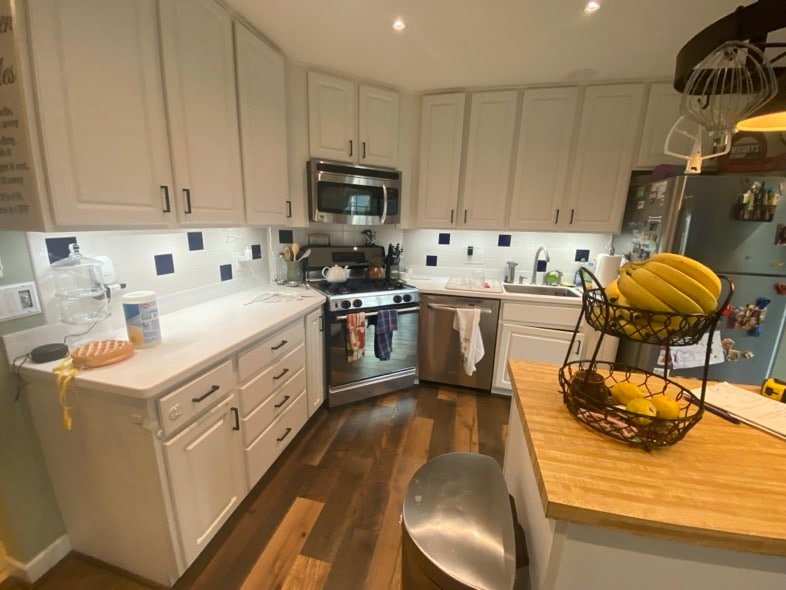
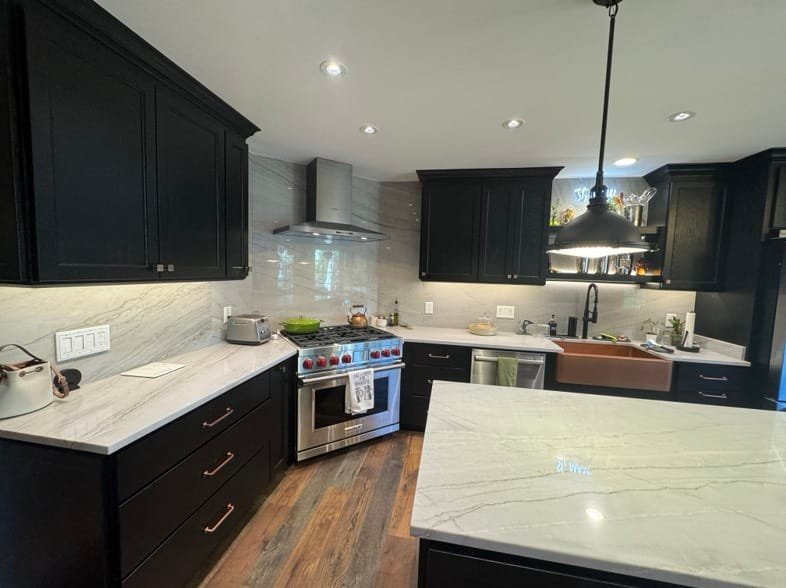
Daily cooking means spills near the sink, dropped pans, and foot traffic, you need flooring that lasts 15-20 years without constant repairs. Proper protection starts during installation. We seal tile grout lines with penetrating sealer 48 hours after installation to block moisture and stains. For vinyl plank, we install waterproof underlayment to stop leaks from reaching your subfloor.
Baltimore winters bring salt, slush, and mud that scratch soft flooring finishes. We recommend textured tile or high-density vinyl to handle the abuse. Matte-finish porcelain hides scuff marks better than glossy tile, and luxury vinyl plank with an AC3 (or higher) wear layer resists scratches from chair legs and dropped utensils. These materials stand up to Baltimore’s freeze-thaw cycles and humid summers without cracking or warping.
Simple maintenance keeps your new floor looking great. Place absorbent mats near the sink and stove to catch spills before they spread. Wipe up standing water within a few hours to prevent seepage at seams.
Sweep or vacuum daily to remove grit and debris that can grind into surfaces. Before we finish your project, we provide care instructions tailored to your specific flooring material, including which cleaners are safe and which can damage the finish. Questions about protecting your investment? Ask during your consultation.
In-home meeting (up to 2 hours) to understand project vision, discuss feasibility, style, materials, and ballpark budget
Detailed design work, CAD drawings, site analysis, structural evaluation, mechanical/electrical assessment, and preliminary designs
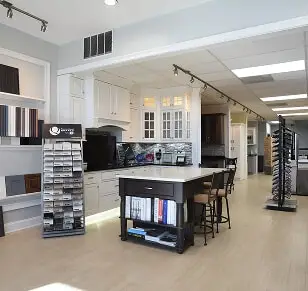
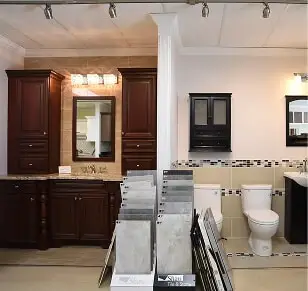
Clients visit their on-site showroom where the design team helps select cabinets, countertops, appliances, flooring, fixtures, lighting, and tile within budget parameters
Scope and budget finalized, Construction Agreement created, target dates set, permits filed
Follows detailed written building processes with step-by-step procedures
Owner Vasilios personally conducts a detailed walk-through to ensure satisfaction