

REQUEST YOUR CONSULTATION NOW





Limited square footage and narrow floor plans are common in Federal Hill, Canton, and Hampden rowhomes. We’ve worked in hundreds of these historic Charm City homes, and the challenge of fitting modern functionality into a 10-12 foot wide kitchen never gets old. Galley and L-shaped layouts create efficient work triangles without removing walls.
This keeps your cooking, prep, and cleanup zones within easy reach – perfect whether you’re making crab cakes or meal prepping for the week. Many Baltimore rowhomes have those classic narrow dimensions that require creative cabinet and appliance placement. Our advice? Don’t fight the rowhome layout – embrace it. Some of our most successful projects work with the existing footprint rather than trying to completely reinvent it.
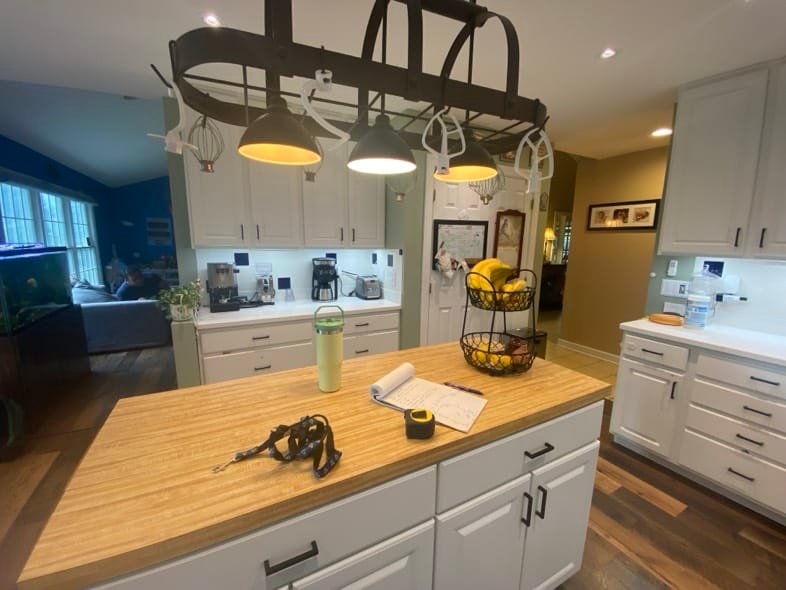
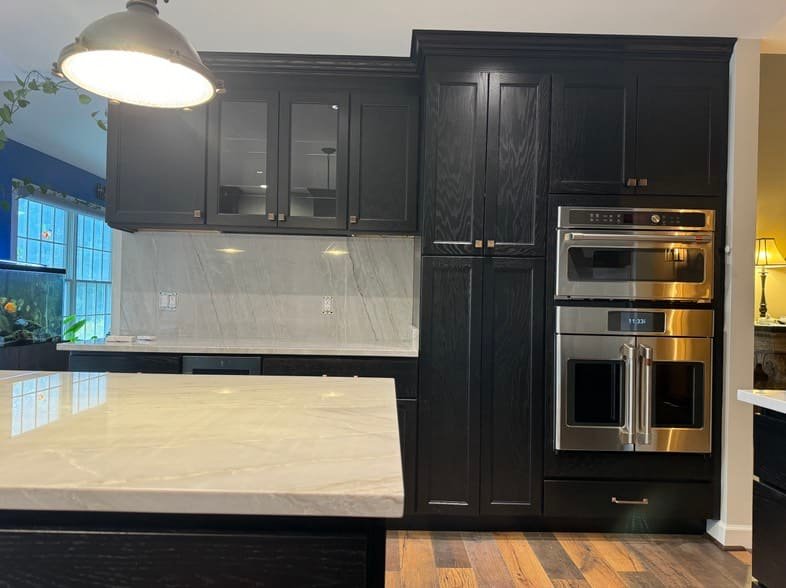
Shaker cabinets, flat-panel doors, and quartz countertops define modern kitchen style across Baltimore neighborhoods from Patterson Park to Bolton Hill. After watching design trends come and go for decades in this city, we tell our clients this: neutral cabinet colors and durable materials hold value. White, gray, and natural wood tones pair well with stainless appliances and minimalist hardware.
We’ve seen homeowners regret bold cabinet colors five years later, but we’ve never had anyone regret choosing quality quartz or granite. These materials perform well during Baltimore’s sticky August heat without warping or staining. One client in Patterson Park told us her quartz counters still look brand new after seven years of cooking for a family of five. If you’re considering premium finishes like custom cabinetry or high-end stone countertops, our luxury kitchen remodeling services might be a better fit.
Planning a kitchen remodel around your work schedule and daily routine minimizes disruption. We’ve remodeled kitchens for teachers who needed work done during summer break and families who coordinated projects around Preakness season. We provide week-by-week schedules so you know when demolition, installation, and inspections occur.
Here’s something we learned the hard way working in Baltimore: permit approval with Baltimore City adds 1-2 weeks to project start dates. We submit applications early to the Department of Housing and track approval status to keep your project moving forward. Our best advice is to set up a functional temporary kitchen in another room – a microwave, toaster oven, and electric kettle can get you through construction without hitting up R&R Taqueria every night.
Most Baltimore homes in Bolton Hill and Mount Vernon built before 1950 require electrical upgrades for modern kitchen appliances. Within five minutes of inspecting an electrical panel in these historic neighborhoods, we can identify whether a home needs upgrading.
Upgraded electrical panels and GFCI outlets safely power induction cooktops, double ovens, and dishwashers. Many pre-1950 Baltimore homes – especially those beautiful brick rowhomes near Druid Hill Park and throughout Charles Village – have 60-100 amp service that needs upgrading for modern kitchen loads.
We work with licensed electricians to install 200-amp service and dedicated circuits for high-demand appliances. Upgrading electrical service adds cost upfront, but we’ve seen too many Baltimore homeowners regret skipping this step when their breakers trip during Thanksgiving dinner prep.
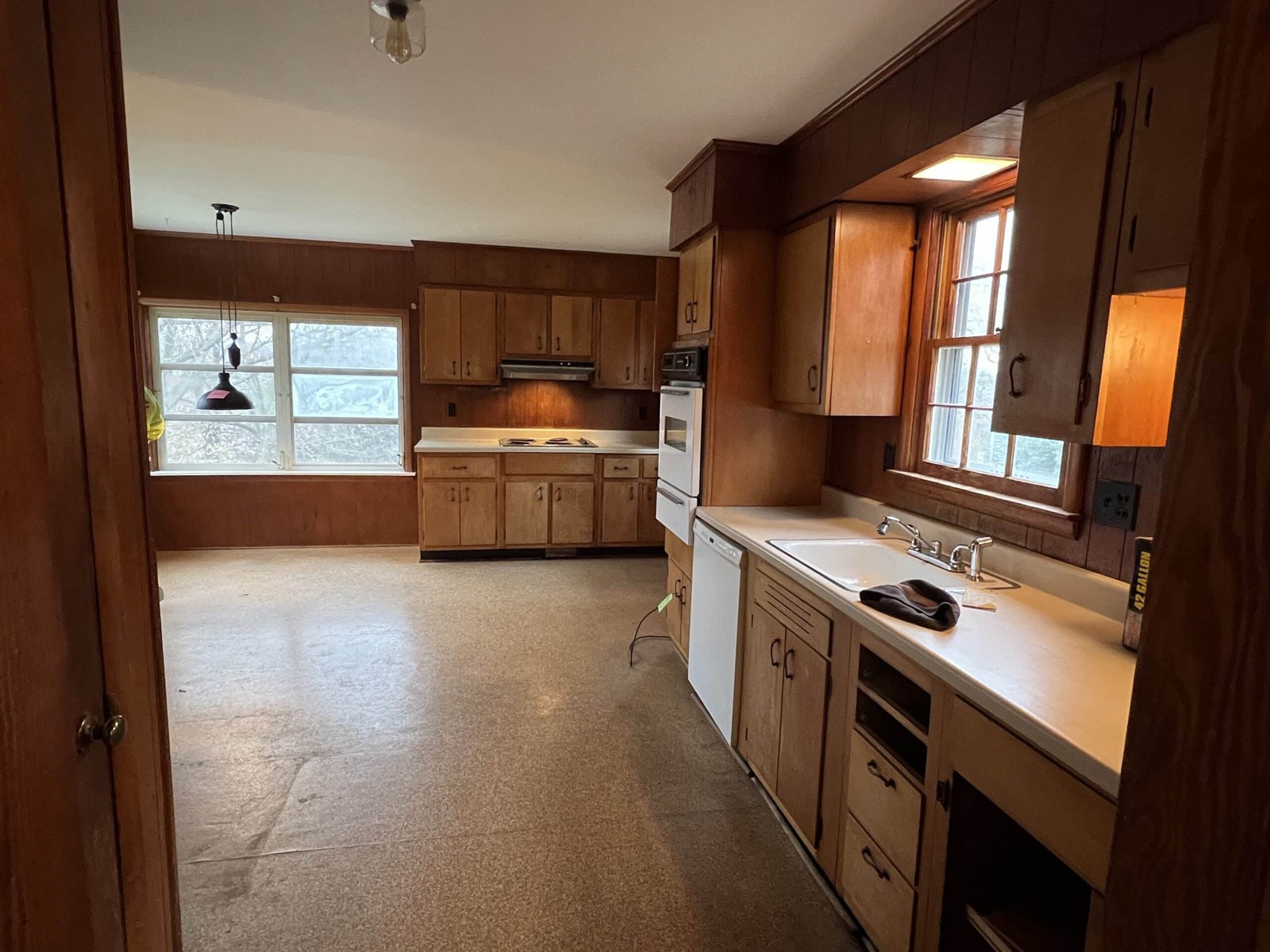
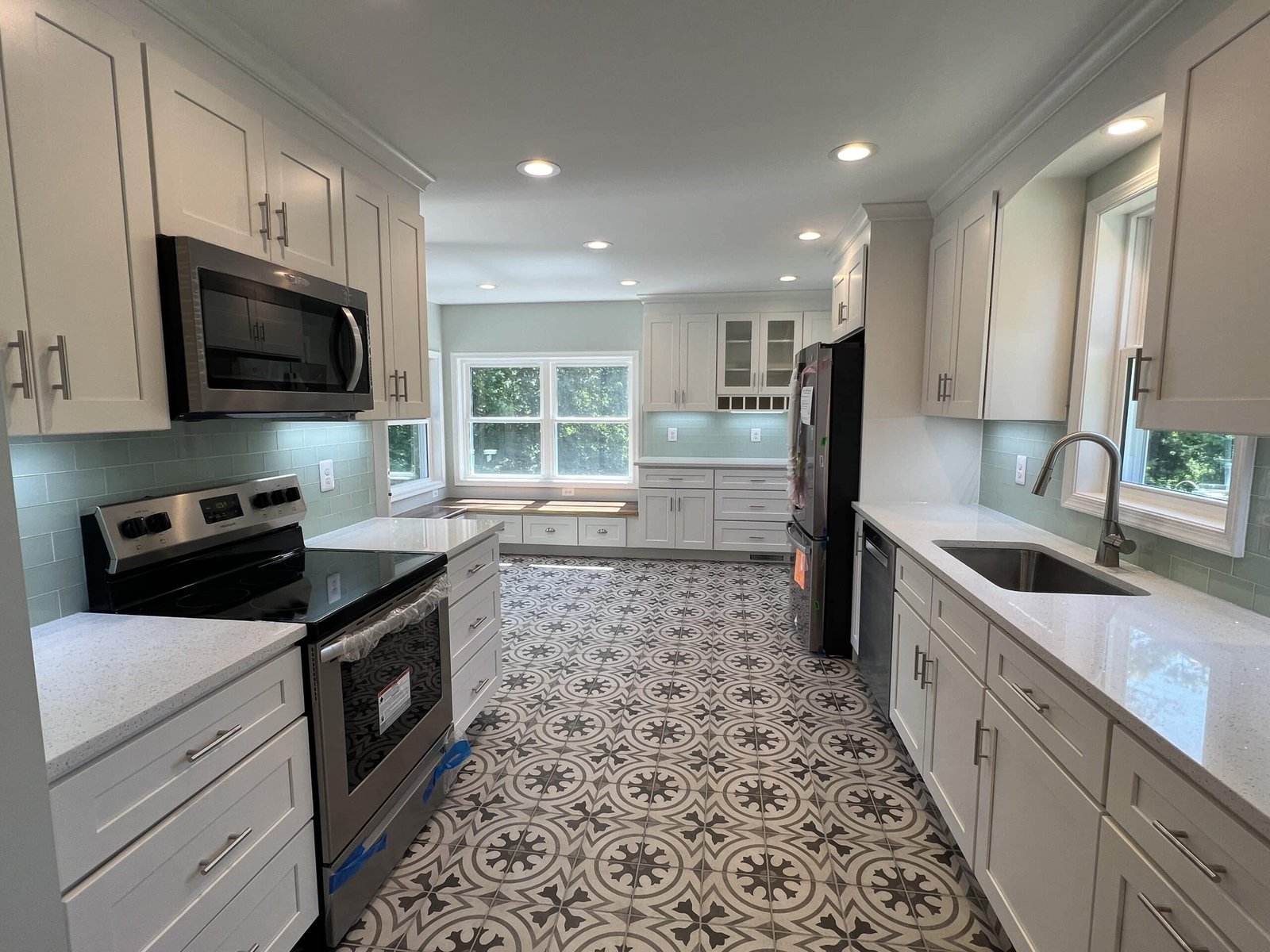
Baltimore homeowners increasingly request handleless cabinets, open shelving, and integrated appliances for sleek, modern kitchens. We’ve noticed a clear shift in Baltimore kitchen design preferences, homeowners want less on display and more hidden storage.
Minimalist designs reduce visual clutter and make small kitchens feel larger. Soft-close drawers, pull-out pantries, and vertical dividers keep cookware organized. These features are especially popular in renovated rowhomes throughout Station North, Remington, and newer developments across Baltimore County.
This aligns with national data: the National Kitchen & Bath Association’s 2024 design trends research shows contemporary and minimalist styles leading kitchen remodeling preferences nationwide. In our experience serving Baltimore communities from Fells Point to Catonsville, homeowners who invest in quality organizational systems actually use their kitchens more and enjoy cooking again.
Identifying load-bearing walls is critical when opening kitchens to dining areas, especially in Baltimore rowhomes. We’ve walked into homes across Baltimore, from Canton to Pigtown, where previous contractors removed load-bearing walls without proper support.
The damage was expensive to fix. Licensed contractors assess structural needs and install support beams when removing walls. Baltimore rowhomes share party walls with neighbors, requiring careful structural planning and permits through Baltimore City’s Department of Housing.
This is especially important in historic districts like Federal Hill and Locust Point. We coordinate with licensed structural engineers and obtain all required approvals from Baltimore City before modifying any shared or load-bearing walls. Our philosophy is simple: never compromise structural integrity for aesthetics. The right beam placement can give you the open space you want while keeping your home safe.
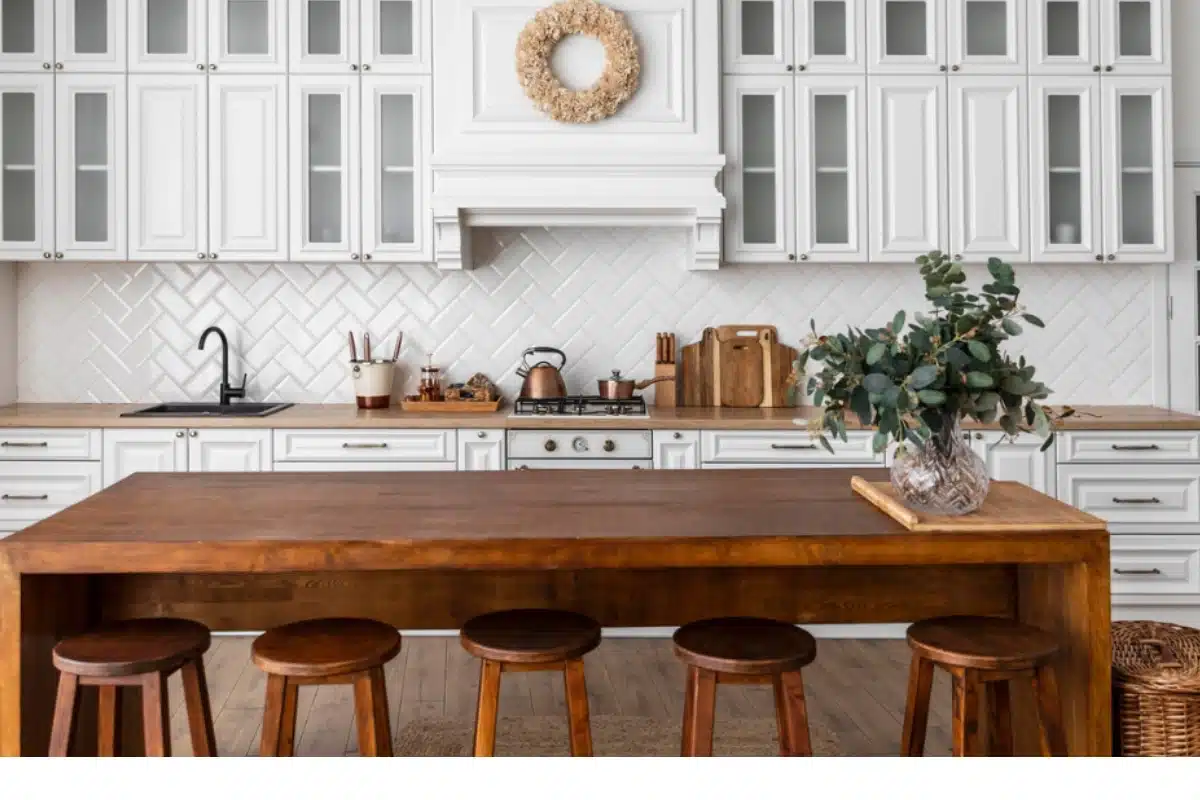
Start by measuring your existing kitchen space and identifying structural elements like walls, windows, and doors, especially important in Baltimore rowhomes with shared party walls. Choose a modern layout that fits your space and cooking habits, galley and L-shaped layouts work well in Baltimore rowhomes, while open concepts suit larger homes.
We always ask clients how they actually use their kitchen , do you bake often? Do you host crab feasts? Do multiple people cook at once? Select cabinets, countertops, and finishes in neutral colors with clean hardware.
Plan electrical and plumbing locations for new appliances and fixtures. Apply for Baltimore City permits through the Department of Housing. Hire a licensed kitchen remodeler to handle demolition, installation, and inspections. Schedule a final walkthrough to verify all work meets City code and design expectations.
In-home meeting (up to 2 hours) to understand project vision, discuss feasibility, style, materials, and ballpark budget
Detailed design work, CAD drawings, site analysis, structural evaluation, mechanical/electrical assessment, and preliminary designs
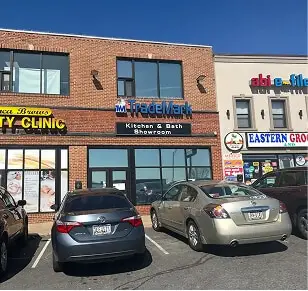
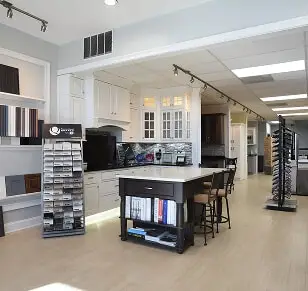
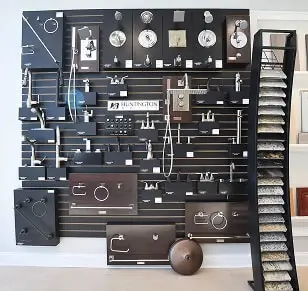
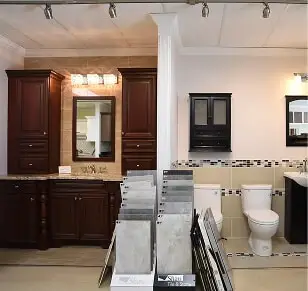
Clients visit their on-site showroom where the design team helps select cabinets, countertops, appliances, flooring, fixtures, lighting, and tile within budget parameters
Scope and budget finalized, Construction Agreement created, target dates set, permits filed
Follows detailed written building processes with step-by-step procedures
Owner Vasilios personally conducts a detailed walk-through to ensure satisfaction