

REQUEST YOUR CONSULTATION NOW






In Baltimore, kitchen island installation transforms narrow galley kitchens and open-plan row houses into functional cooking spaces. We install custom islands that add prep space, seating, and storage, perfect for Canton townhomes and Federal Hill condos. You’ll get a site visit, custom fit for your layout, and full installation with electrical, plumbing, and structural tie-ins from Baltimore kitchen remodelers. Each project starts with measuring your existing layout to confirm the island fits without blocking doorways or creating tight corners
We anchor kitchen islands to prevent shifting when kids lean on edges or adults use the island for heavy prep work. Your island stays stable during daily use because we secure the base to floor joists using L-brackets or construction adhesive.
Many Baltimore rowhomes in Fells Point and Mount Vernon have uneven subfloors that developed over decades of settling. We add shims and extra bracing before installation to create a level, solid foundation, so you never deal with wobbling counters or loose cabinets.
Proper anchoring also prevents the island from sliding across the floor when you’re rolling dough or cutting through dense vegetables. We test stability after installation by applying pressure to all edges and corners, ensuring everything is rock-solid before we finish.
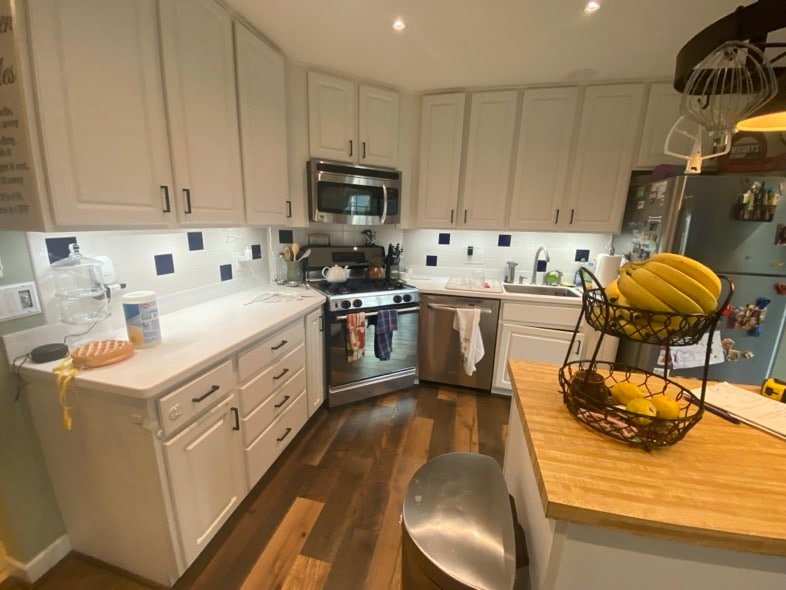
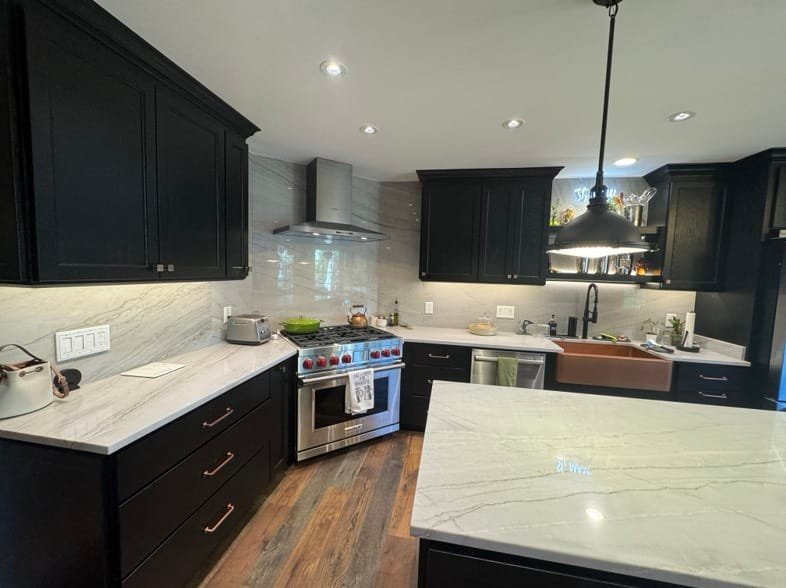
We maintain 42 to 48 inches of clearance between your island and perimeter counters so two cooks can move without collisions. Industry standards recommend at least 42 inches for one cook and 48 inches for multiple cooks, tighter spaces create bottlenecks that slow meal prep and block cabinet access. Baltimore row house kitchens in Canton and Locust Point often measure 10 to 12 feet wide, which limits how large your island can be. We size your island proportionally to avoid crowding the room while still giving you useful counter space.
We also check clearance when cabinet doors and dishwasher doors open to confirm nothing blocks the pathway. If your kitchen is narrow, we can design a smaller island or suggest a movable cart that rolls away when you need extra room.
We install outlets on your island so you can use stand mixers, blenders, and slow cookers without running cords across the kitchen. Code requires at least one outlet if your island exceeds 24 inches of countertop. We run circuits through the floor or cabinet base to keep wiring hidden and safe.
We handle all electrical work, including Baltimore City permits and inspections. Most families use island outlets daily for coffee makers, phone charging, and kitchen gadgets. We position outlets on island ends or sides so they stay accessible but don’t interfere with seating. Pop-up outlets hide in the counter when not in use.
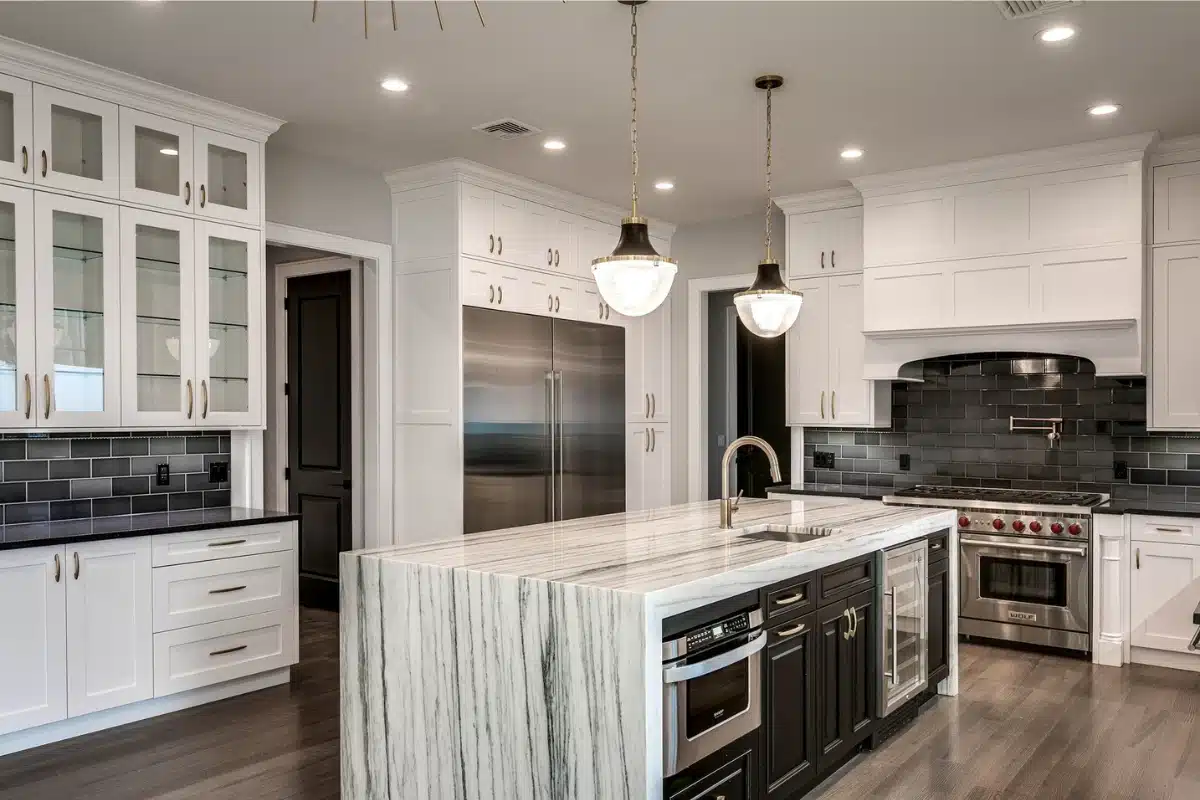
We build islands at 36 inches for standard prep work or 42 inches for bar seating with high stools. The 36-inch height matches your existing counters and works well for chopping vegetables, kneading dough, and assembling meals. The 42-inch height creates a raised bar that separates your kitchen from dining or living areas.
Custom heights accommodate wheelchair access when your family needs it. Open-plan Baltimore lofts in Riverside and Harbor East use raised islands to separate the kitchen from living zones without adding walls.
Bar-height islands pair with stools that have 30-inch seats, while counter-height islands use 24-inch stools. We can also build two-tier islands with a lower prep surface and raised eating ledge, giving you the best of both worlds. Proper kitchen lighting installation above your island improves visibility for meal prep and creates ambiance for dining. Pendant lights hang 30 to 36 inches above the island surface to light your workspace without blocking sightlines.
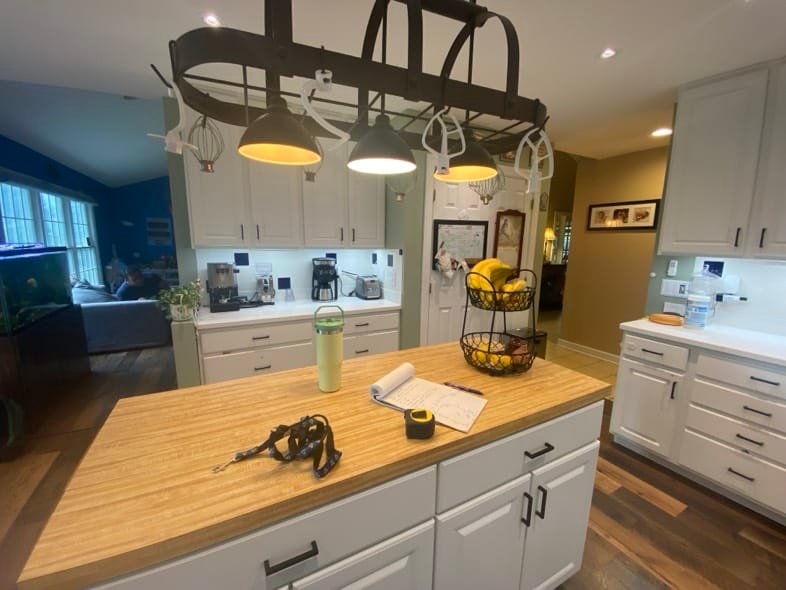
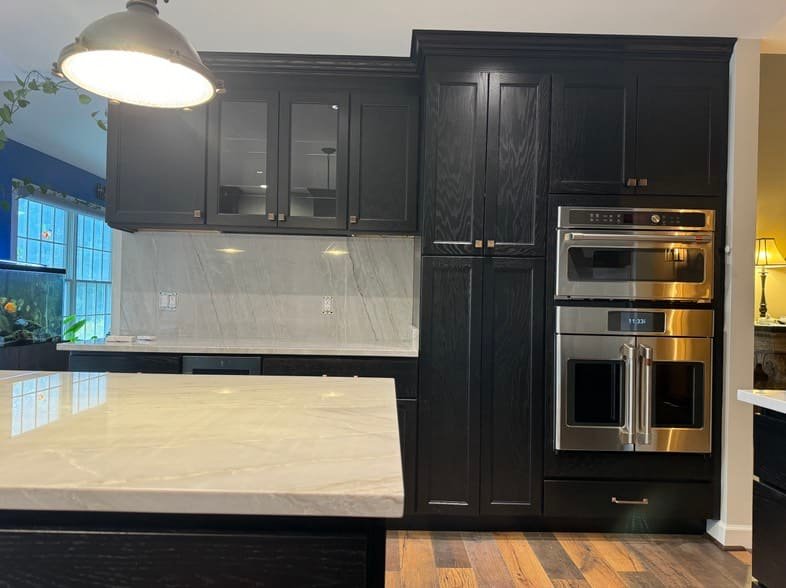
We level the cabinet base, anchor it to your floor, route wiring, attach the countertop, and match trim to your existing finishes. Your island integrates seamlessly with cabinetry and flooring in Hampden and Charles Village homes.
The installation involves coordination with electricians and plumbers if your island includes a sink or dishwasher. You get one crew that handles all trades – no juggling multiple contractors.
We install decorative panels, corbels, or trim that match your kitchen style, then caulk seams and clean the entire island. Most installations finish with a walk-through.
We place your island 4 to 6 feet from the stove and sink to keep the work triangle efficient. This spacing reduces steps during cooking and gives you room to open the oven door, pull out drawers, and turn around with hot pans without bumping into the island.
Baltimore galley kitchens in Pigtown and Bolton Hill benefit from movable or peninsula islands when a permanent center island blocks traffic flow. A peninsula island connects to your existing counters on one end and leaves the other end open for traffic. Movable islands roll on locking casters and give you flexibility to reconfigure your space.
We measure distances during your site visit and draw a floor plan showing how you’ll move through the space. The goal is creating a kitchen where two people can cook together comfortably.

In-home meeting (up to 2 hours) to understand project vision, discuss feasibility, style, materials, and ballpark budget
Detailed design work, CAD drawings, site analysis, structural evaluation, mechanical/electrical assessment, and preliminary designs
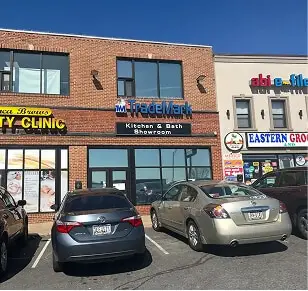
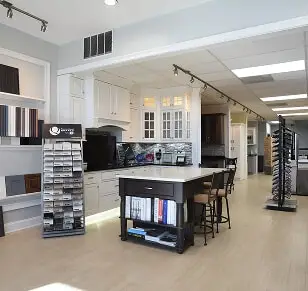
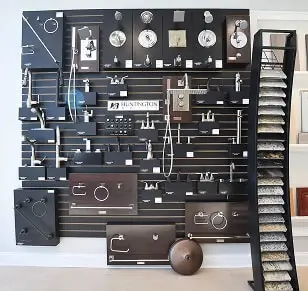
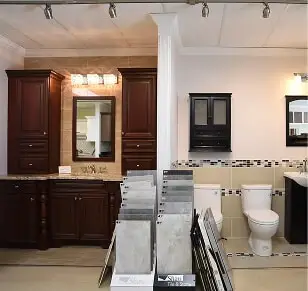
Clients visit their on-site showroom where the design team helps select cabinets, countertops, appliances, flooring, fixtures, lighting, and tile within budget parameters
Scope and budget finalized, Construction Agreement created, target dates set, permits filed
Follows detailed written building processes with step-by-step procedures
Owner Vasilios personally conducts a detailed walk-through to ensure satisfaction